

Uma profile

Special Week


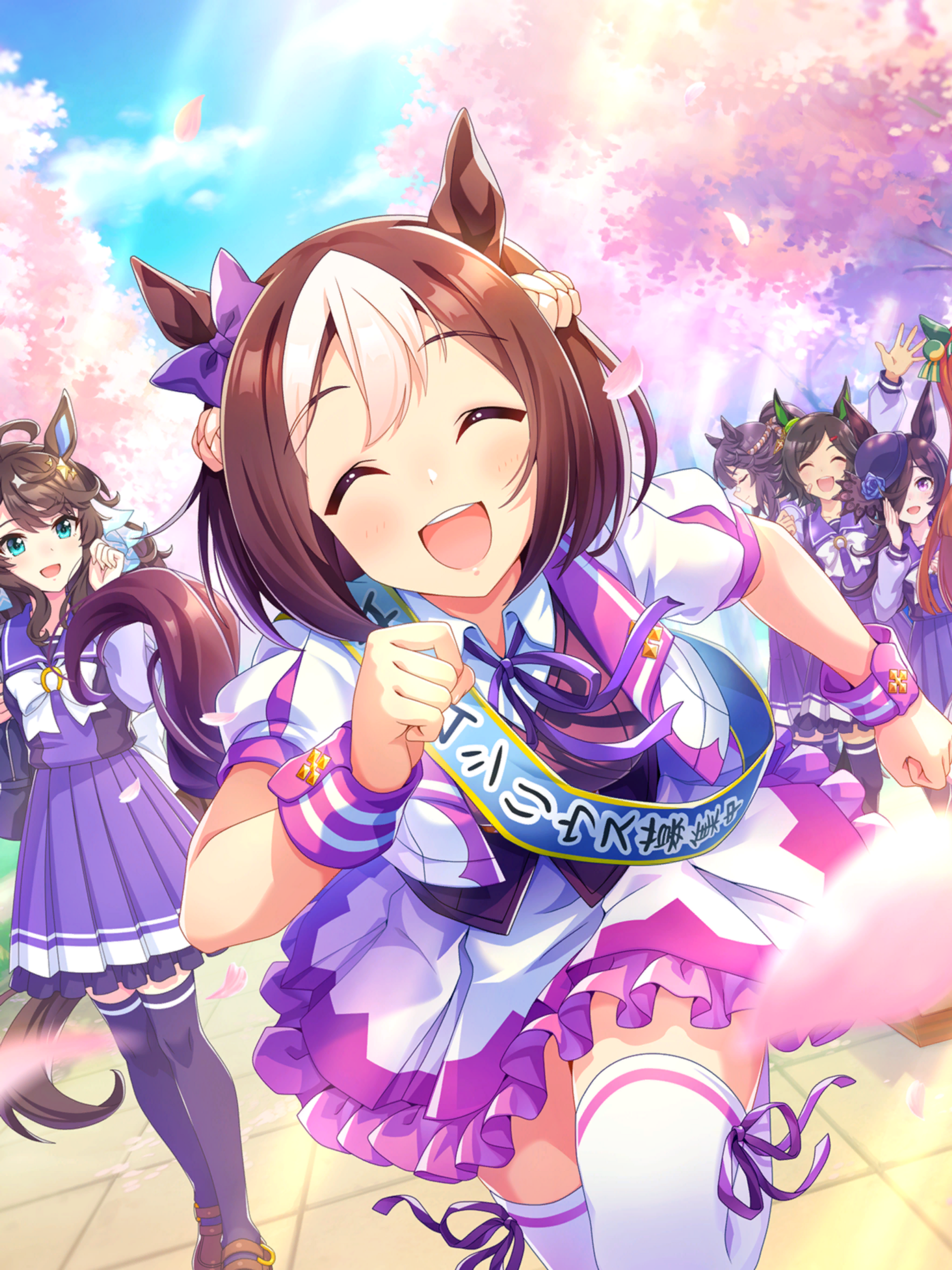
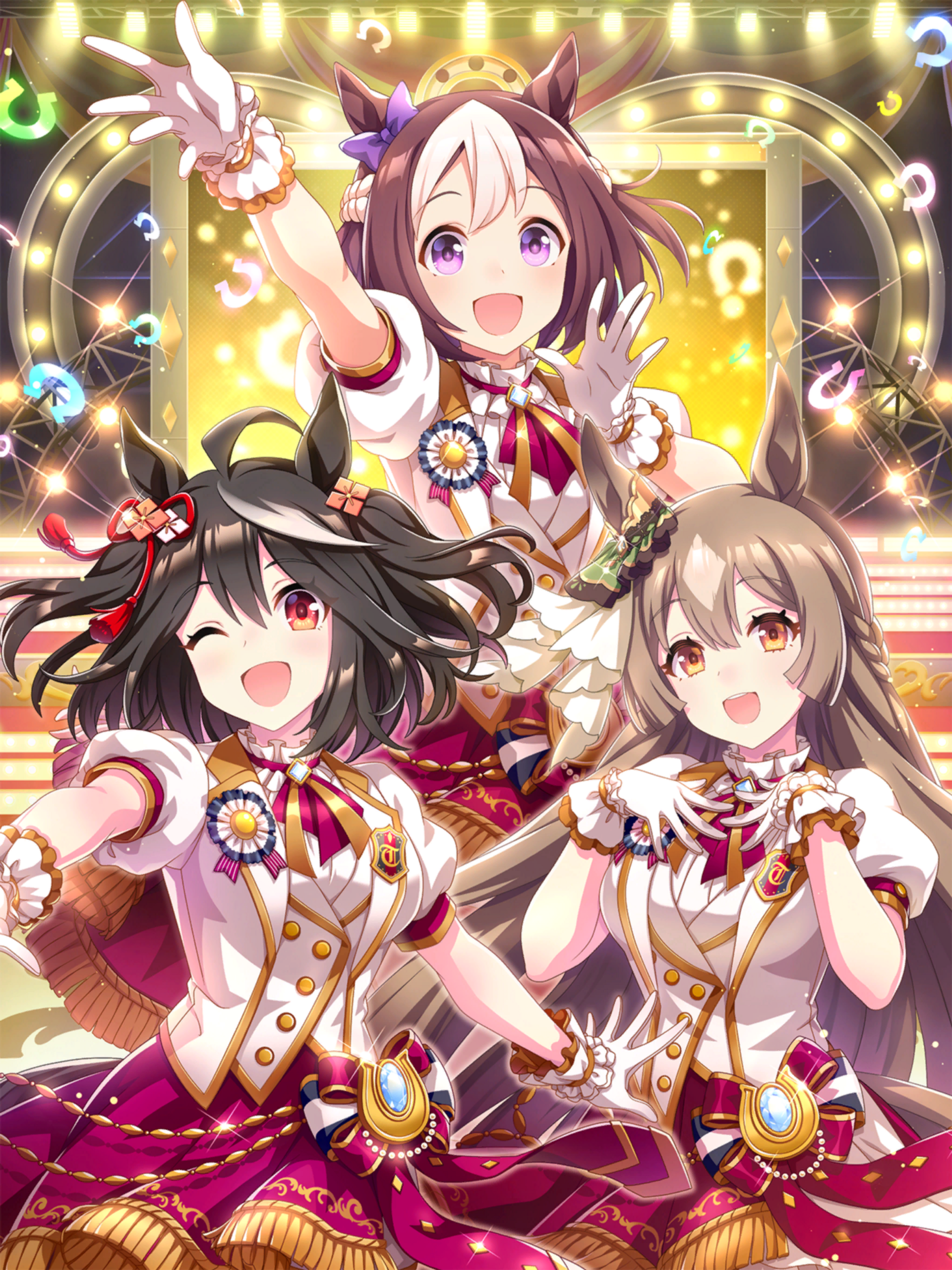
Special Week (スペシャルウィーク), often nicknamed Spe, is an honest, cheerful, hardworking Uma Musume from Hokkaido. After losing her birth mother soon after being born, she was raised by her birth mother’s close human friend. The promise she carries from her two mothers is simple and central to her character: to become “Japan’s number one Uma Musume.”
She tends to stumble, admire the people around her, and keep moving forward through sheer sincerity and grit. Her catchphrase reflects that goal directly: “Moms, watch me! I'll become Japan's number one Uma Musume!” She refers to herself as Watashi and addresses her trainer as Trainer-san.
In school, Special Week is part of the Junior Division and lives in Ritto Dormitory, where her roommate is Silence Suzuka. She is 158 cm tall, with measurements 81-56-81, shoe size L 23.5 cm / R 23.0 cm, and is noted as slightly underweight when nervous before races. Her voice actor is Azumi Waki.
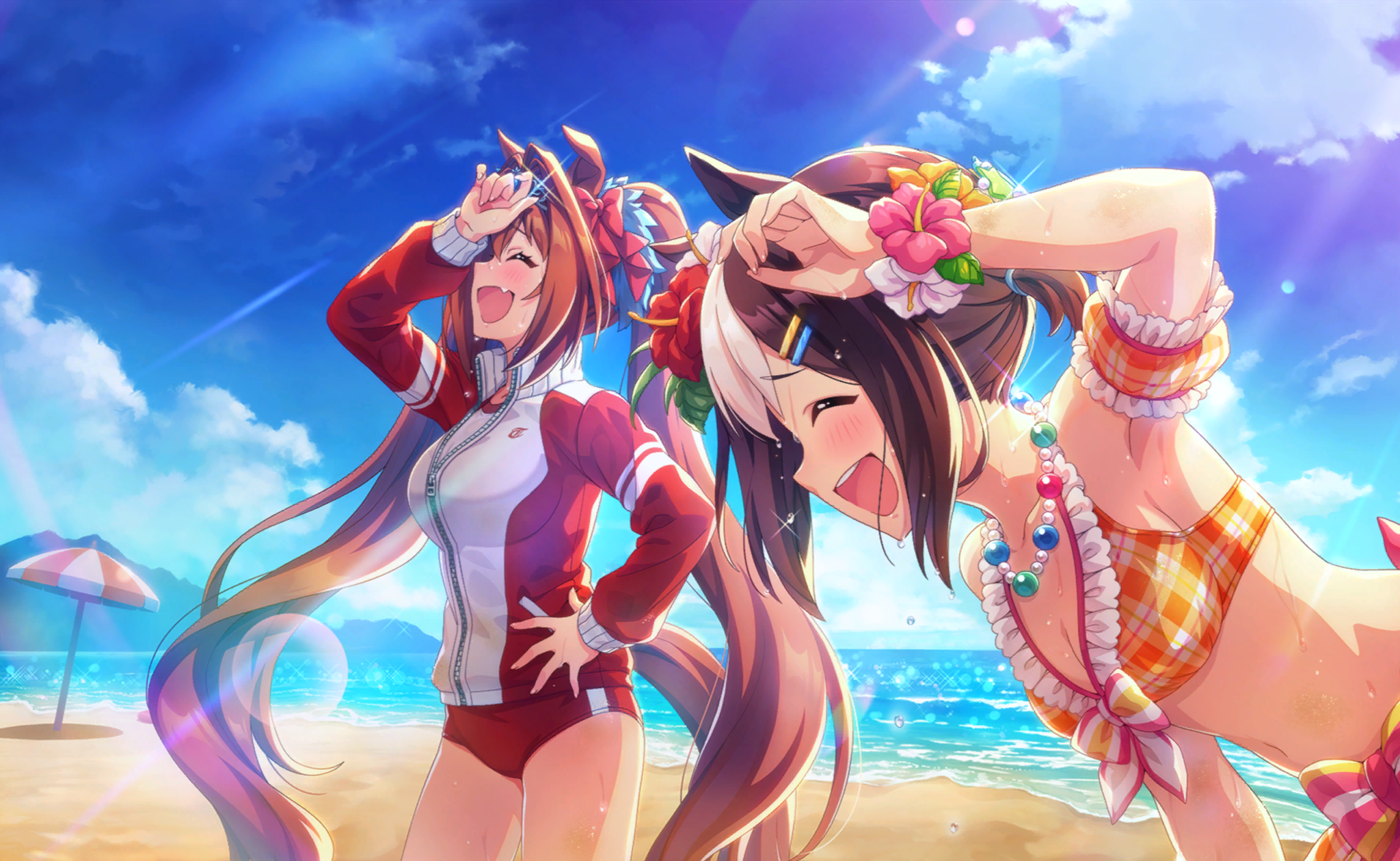
She is commonly associated with Silence Suzuka, Seiun Sky, King Halo, and El Condor Pasa, with Seiun Sky, King Halo, and El Condor Pasa noted among her rivals.
Sources
- https://umamusume.jp/character/specialweek/
- https://umamusume.jp/character/seiunsky/
- https://umamusume.jp/news/detail?id=3168



















Touch fallback
Special WeekTouch and smaller layouts use grouped connection cards instead of the live radar. Open any entry to follow the relationship directly.
Same races
Same Races
12 shared rivals

Latest: TENNO SHO (AUTUMN) · 1999-10-31

Latest: JAPAN CUP · 1999-11-28

Latest: TENNO SHO (AUTUMN) · 1999-10-31

Latest: ARIMA KINEN (44TH THE GRAND PRIX) · 1999-12-26

Latest: ARIMA KINEN (44TH THE GRAND PRIX) · 1999-12-26

Latest: TENNO SHO (AUTUMN) · 1999-10-31

Latest: TAKARAZUKA KINEN · 1999-07-11

Latest: JAPAN CUP · 1999-11-28

Latest: KYOTO DAISHOTEN · 1999-10-10
Latest: KYOTO DAISHOTEN · 1999-10-10

Latest: JAPAN CUP · 1998-11-29

Latest: JAPAN CUP · 1998-11-29
Related Umas
10 total · 10 linked


Rivals
3 total · 3 linked
Stablemates
1 total · 1 linked
Mentioned By Related Umas
9 profiles


Mentioned By Rivals
4 profiles
Mentioned By Stablemates
1 profile
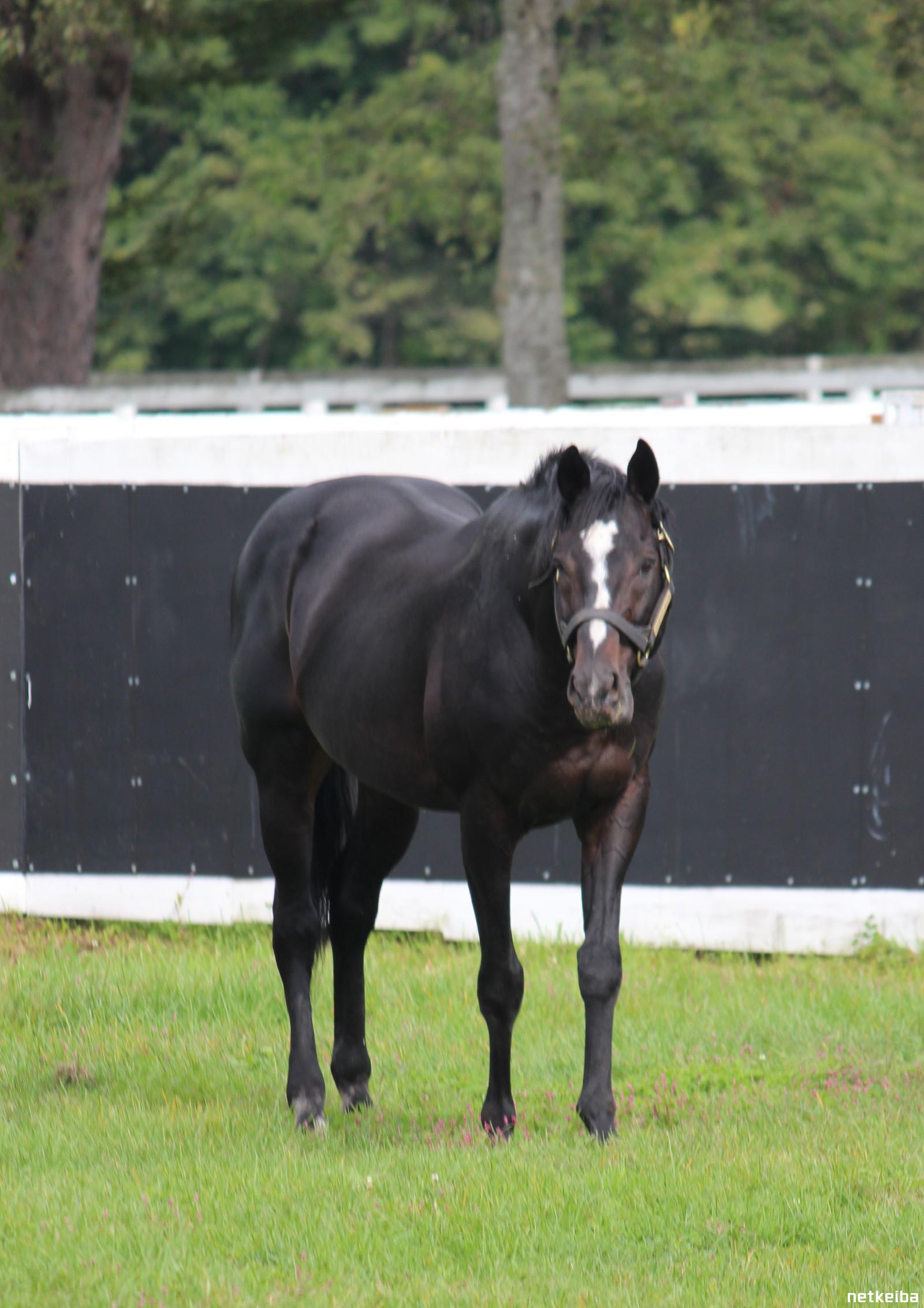
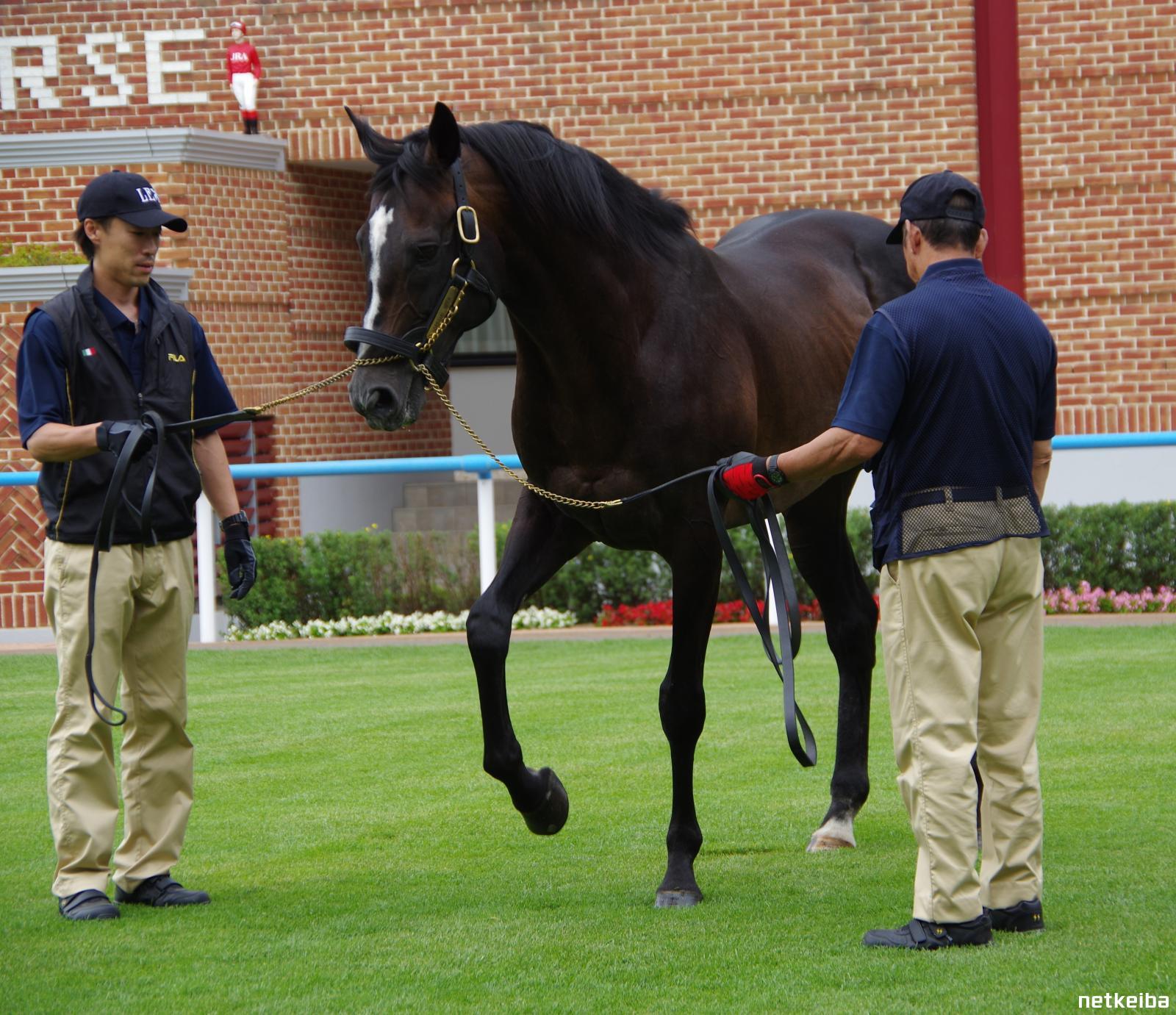
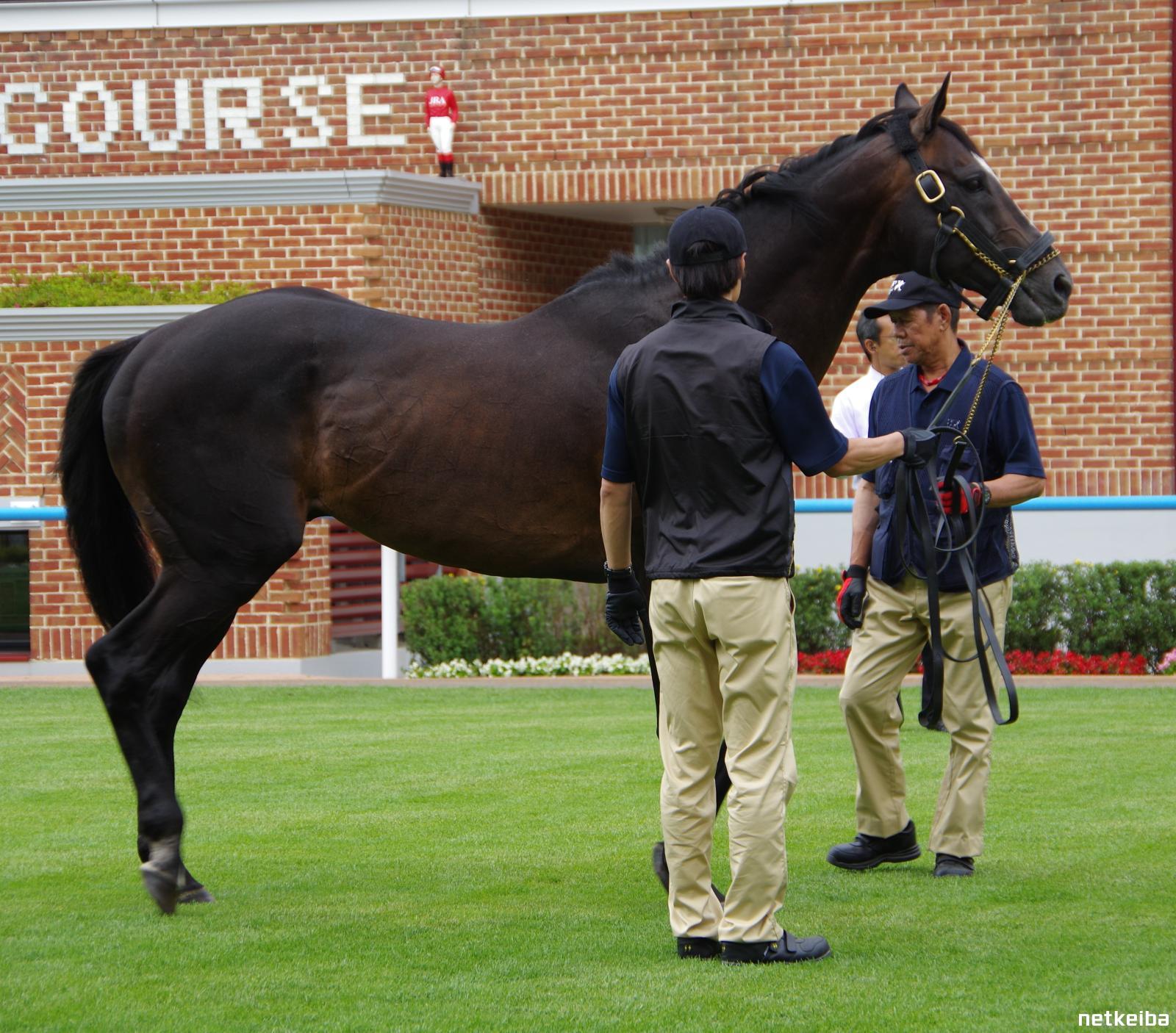
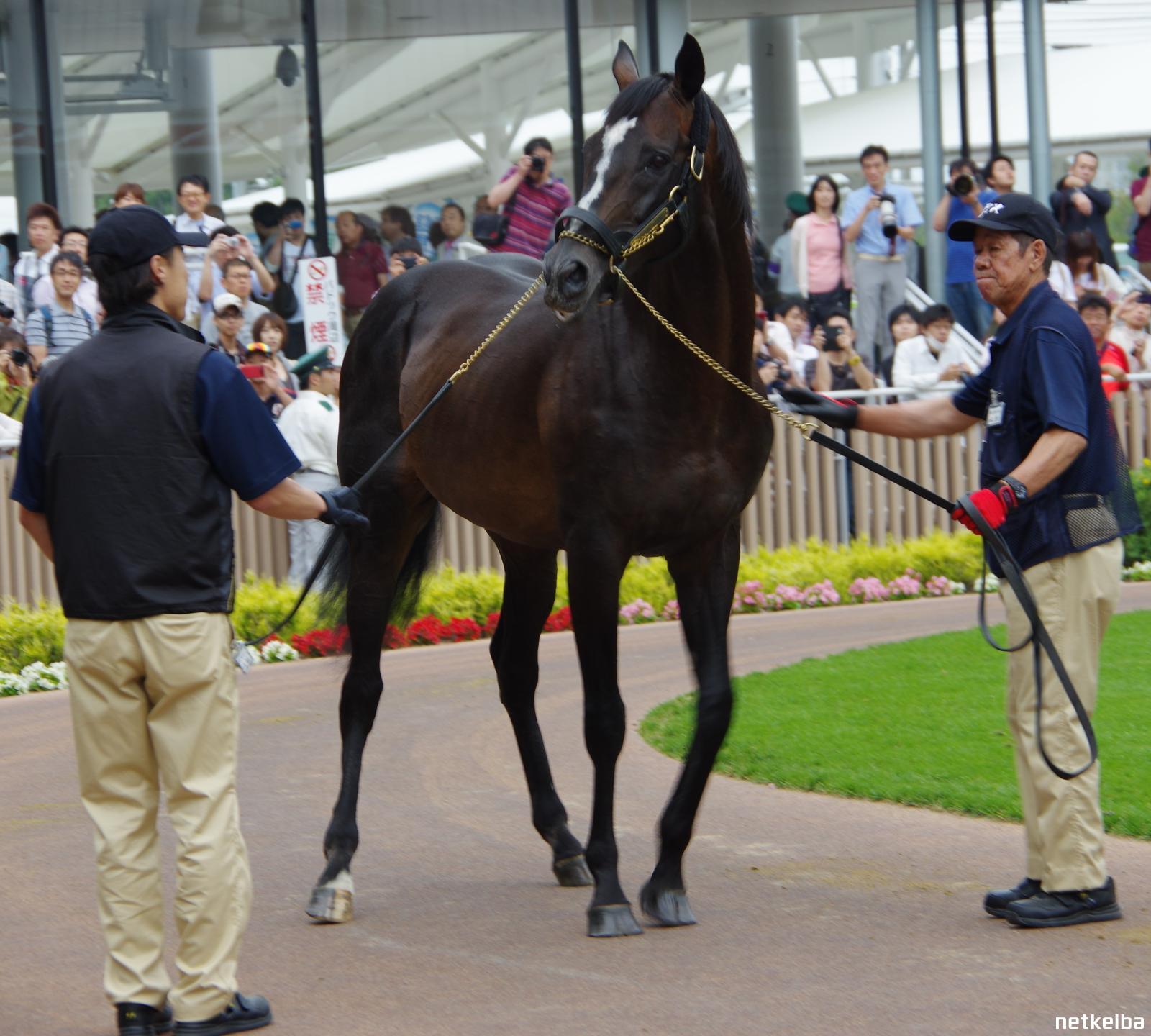
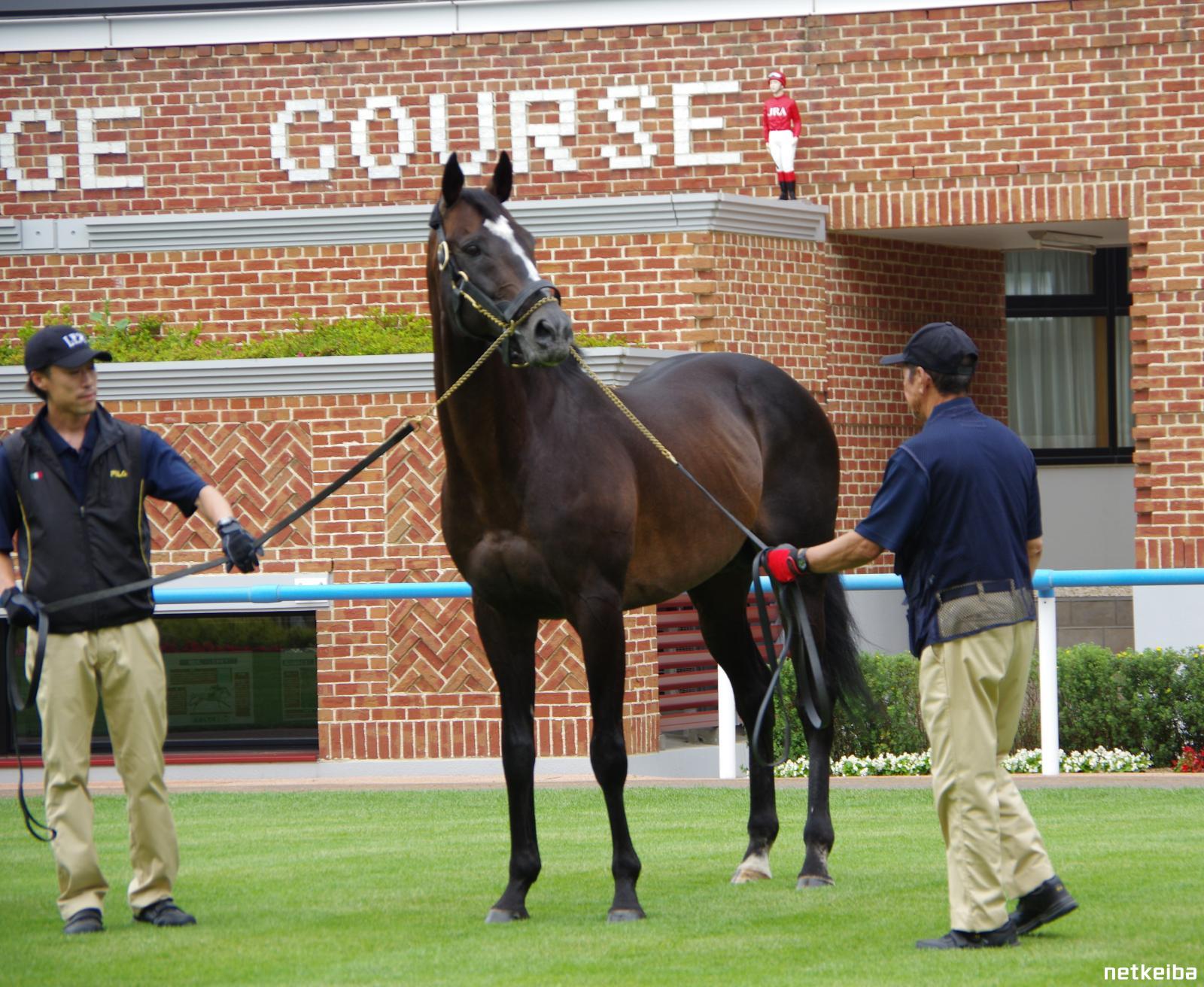
Special Week was a Japanese dark bay stallion whose career was defined by victory in the 1998 Tokyo Yushun (Japanese Derby) and an exceptional 1999 campaign that brought three further top-level wins. He retired with 10 victories from 17 starts, earnings of ¥1,092,623,000, and a record that demonstrated championship-class ability from 2,000 to 3,200 metres.
Career at a glance
Track record
Featured races
Finished 1st · G1 · at Tokyo · over 2400m · Tokyo (JP)
Finished 1st · G1 · at Tokyo · over 2000m · Tokyo (JP)
Finished 1st · G1 · at Tokyo · over 2400m · Tokyo (JP)
At a glance
Origins and pedigree
Foaled in Japan on 2 May 1995, Special Week was bred by Hidaka Taiyo Bokujo. He was a son of Sunday Silence, the American-bred stallion whose sire line became a major force in Japanese racing, and Campaign Girl, a daughter of Maruzensky. His maternal granddam was Lady Shiraoki.
Special Week’s earliest days were marked by the death of Campaign Girl shortly after she foaled him. The orphaned colt consequently had to be hand-fed by the farm’s staff. From that difficult beginning he developed into one of the leading Japanese racehorses of the late 1990s.
He raced for owner Hiroyoshi Usuda and was trained by Toshiaki Shirai at Ritto. Yutaka Take rode him in most of his races and was aboard for the central achievements of his career, including the Japanese Derby and all three of his Grade 1 victories in 1999.
Career at a glance
- Foaled: 2 May 1995
- Breeder: Hidaka Taiyo Bokujo
- Owner: Hiroyoshi Usuda
- Trainer: Toshiaki Shirai, Ritto
- Race record: 17 starts, 10 wins, 4 seconds and 2 thirds
- Earnings: ¥1,092,623,000
- Principal victories: Tokyo Yushun, Tenno Sho (Spring), Tenno Sho (Autumn), Japan Cup
- Award: JRA Special Award, 1999
- Died: 27 April 2018
Racing career
Special Week began racing late in 1997. On 29 November at Hanshin, he won a 1,600-metre turf event on ground rated good to soft, defeating 13 opponents with Take in the saddle. That successful debut provided the foundation for an ambitious three-year-old campaign.
His first appearance of 1998 brought the only result of his career outside the first three: he finished second in the Shiraume Sho at Kyoto. He quickly moved into graded company and won the Grade 3 Kisaragi Sho over 1,800 metres on 8 February, beating Bold Emperor. A month later, he extended his winning sequence in the Grade 2 Yayoi Sho at Nakayama. The 2,000-metre contest was an important step toward the Japanese classics, and Special Week defeated Seiun Sky while starting from the outside draw in a field of 13.
The first classic, the Satsuki Sho at Nakayama, interrupted that progress. Special Week finished third in the 18-runner Grade 1 over 2,000 metres, with Seiun Sky ahead of him. It was a defeat, but it left him well placed for the longer and more prestigious Tokyo Yushun.
The 1998 Tokyo Yushun
The Japanese Derby at Tokyo on 7 June became the defining victory of Special Week’s three-year-old season. Ridden by Take, he won the 2,400-metre race on good-to-soft turf, defeating Bold Emperor in a field of 18.
The result established him as a classic winner and remains the signature achievement of his career. It also completed a rapid rise: less than seven months after his racecourse debut, Special Week had advanced through the Kisaragi Sho and Yayoi Sho to capture Japan’s foremost race for three-year-olds.
Returning in the autumn, he won the Grade 2 Kyoto Shimbun Hai over 2,200 metres, with King Halo finishing second. He then stepped up to 3,000 metres for the Kikuka Sho, the Japanese St Leger, and finished second to Seiun Sky. That result continued a season-long rivalry in which Special Week had beaten Seiun Sky in the Yayoi Sho but finished behind him in two classics.
Special Week closed 1998 by facing older and international opposition in the Japan Cup. With Yukio Okabe riding, he finished third over 2,400 metres at Tokyo; the American-bred El Condor Pasa was second. Although Special Week did not win, his placing in the international Grade 1 completed a three-year-old campaign in which he had already won four graded races, headed by the Derby.
The championship campaign of 1999
Special Week returned at four with two preparatory victories. Olivier Peslier rode him to win the Grade 2 American Jockey Club Cup over 2,200 metres at Nakayama in January. Reunited with Take, he then won the Grade 2 Hanshin Daishoten over 3,000 metres on soft ground, defeating Mejiro Bright. That performance set up his attempt at the longest major prize of his career.
Tenno Sho (Spring)
On 2 May—his fourth birthday—Special Week contested the Tenno Sho (Spring) over 3,200 metres at Kyoto. He defeated Mejiro Bright for the second consecutive race, this time in Grade 1 company.
The victory was significant both as his first top-level success since the Derby and as evidence of his effectiveness over an extended range. He had already won major races at 1,800, 2,000, 2,200 and 2,400 metres; the Spring Tenno Sho added a championship race at 3,200 metres to that record.
Special Week next finished second to the American-bred Grass Wonder in the Takarazuka Kinen over 2,200 metres at Hanshin. Following a break, he returned in October and finished seventh in the Grade 2 Kyoto Daishoten, the sole unplaced effort of his 17-race career. That setback immediately preceded the most productive passage of his racing life.
Tenno Sho (Autumn)
Three weeks after the Kyoto Daishoten, Special Week dropped back to 2,000 metres for the Tenno Sho (Autumn) at Tokyo. In a field of 17, he rebounded to win the Grade 1 with Stay Gold in second place.
Coming after success over 3,200 metres in the spring, the victory underscored the breadth of his achievements during 1999. The two Tenno Sho races placed very different demands on a horse, yet Special Week won both in the same season. The Autumn Tenno Sho also transformed his Kyoto defeat from a possible decline into a brief interruption before two major victories at Tokyo.
Japan Cup
Special Week returned to 2,400 metres for the Japan Cup on 28 November. He had finished third in the race as a three-year-old, but in 1999 he won it, defeating the Irish-bred Indigenous in a 14-runner field.
The Japan Cup completed a sequence of three Grade 1 victories during the year: the Tenno Sho (Spring), Tenno Sho (Autumn) and Japan Cup. Together they covered 3,200, 2,000 and 2,400 metres, giving his final season a distinction that rested not only on the number of major wins but also on their varied distances.
His last start came in the Arima Kinen at Nakayama on 26 December. Special Week finished second to Grass Wonder over 2,500 metres, matching their order from the Takarazuka Kinen. He therefore ended his racing career in the first two, as he had in 14 of his 17 starts. His 1999 campaign was recognized with a JRA Special Award.
Connections and competitive record
Special Week’s career was closely associated with trainer Toshiaki Shirai and jockey Yutaka Take. Shirai prepared him from the Ritto training centre for owner Hiroyoshi Usuda, while Take rode him in 15 of his 17 races. Their major successes together encompassed the 1998 Japanese Derby and the four Grade 1 wins that form the core of Special Week’s reputation.
His record was notable for consistency as well as achievement. From 17 starts he won 10 times, finished second four times and third twice. His only finish outside the first three was seventh in the 1999 Kyoto Daishoten, after which he immediately won the Autumn Tenno Sho and Japan Cup.
His important rivals also linked the different phases of his career. Seiun Sky opposed him through the 1998 classic campaign; Mejiro Bright was runner-up in both of his major long-distance victories during spring 1999; and Grass Wonder defeated him in the Takarazuka Kinen and the concluding Arima Kinen. Bold Emperor, King Halo, Stay Gold and Indigenous filled second place behind him in other major wins.
Retirement and legacy
After his racing career, Special Week entered stud. His stallion statistics credit him with 1,236 progeny and 864 victories by those offspring in Japan Racing Association competition. Through his breeding career, he continued the Sunday Silence sire line that had shaped his own pedigree and racing identity.
Special Week died on 27 April 2018, five days before what would have been his 23rd birthday. His record endures principally through a rare combination of classic success, stamina and range: Japanese Derby winner at three, Spring Tenno Sho winner over 3,200 metres at four, and later that same year winner of both the 2,000-metre Autumn Tenno Sho and 2,400-metre Japan Cup.
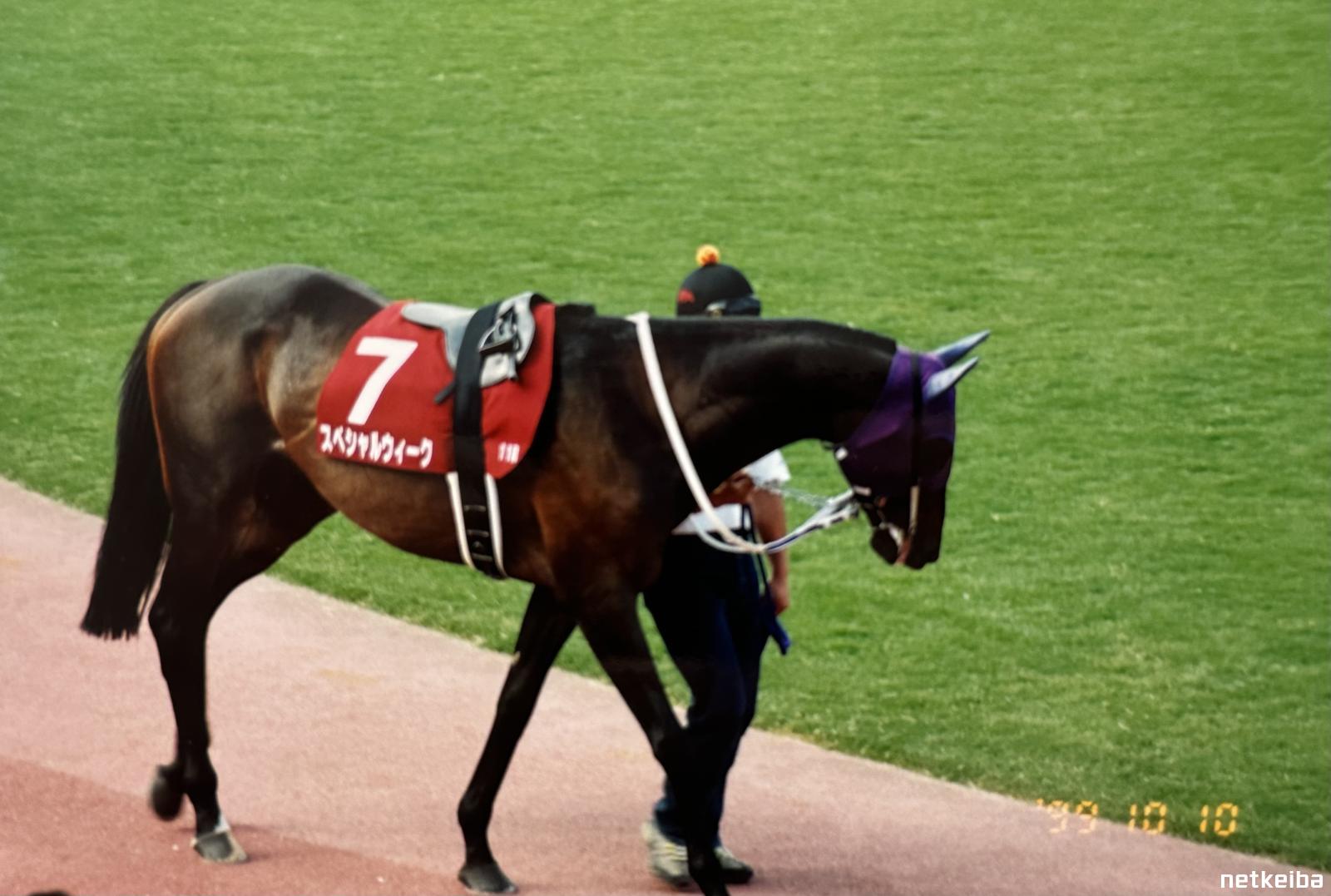
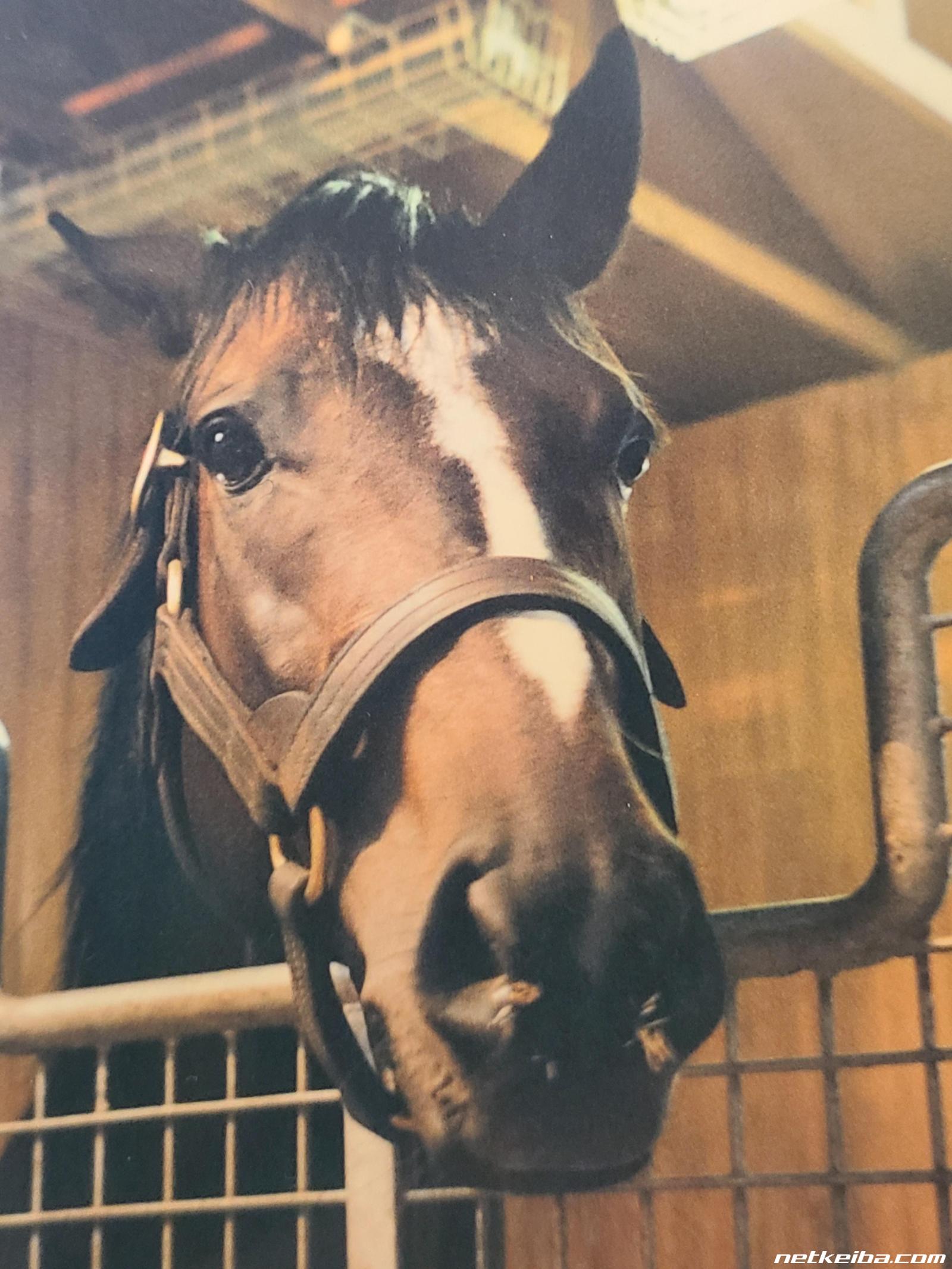
More photographs
IRL image archive
3 more images
| Date | Race | Grade | Course | Going | Dist | Pos | Draw | Jockey | Wgt | SP | Time |
|---|---|---|---|---|---|---|---|---|---|---|---|
| 1999-12-26 |
ARIMA KINEN (44TH THE GRAND PRIX)
|
G1 | Nakayama (JP) | Good | 2500 m | 2 | 3 | Yutaka Take | 57.0 kg | 3.0 | 2:37.2 |
| 1999-11-28 |
JAPAN CUP
|
G1 | Tokyo (JP) | Good | 2400 m | 1 | 13 | Yutaka Take | 57.0 kg | 3.4 | 2:25.5 |
| 1999-10-31 |
TENNO SHO (AUTUMN)
|
G1 | Tokyo (JP) | Good | 2000 m | 1 | 9 | Yutaka Take | 58.0 kg | 6.8 | 1:58.0 |
| 1999-10-10 | G2 | Kyoto (JP) | Good | 2400 m | 7 | 7 | Yutaka Take | 59.0 kg | 1.8 | 2:25.1 | |
| 1999-07-11 |
TAKARAZUKA KINEN
|
G1 | Hanshin (JP) | Good | 2200 m | 2 | 9 | Yutaka Take | 58.0 kg | 1.5 | 2:12.6 |
| 1999-05-02 |
TENNO SHO (SPRING)
|
G1 | Kyoto (JP) | Good | 3200 m | 1 | 3 | Yutaka Take | 58.0 kg | 2.3 | 3:15.3 |
| 1999-03-21 |
HANSHIN DAISHOTEN
|
G2 | Hanshin (JP) | Soft | 3000 m | 1 | 5 | Yutaka Take | 58.0 kg | 2.1 | 3:13.4 |
| 1999-01-24 |
AMERICAN JOCKEY CLUB CUP
|
G2 | Nakayama (JP) | Good | 2200 m | 1 | 4 | O.Peslier | 58.0 kg | 2.0 | 2:16.8 |
| 1998-11-29 |
JAPAN CUP
|
G1 | Tokyo (JP) | Good | 2400 m | 3 | 9 | Y.Okabe | 55.0 kg | 3.3 | 2:26.4 |
| 1998-11-08 |
KIKUKA SHO (JAPANESE ST.LEGER)
|
G1 | Kyoto (JP) | Good | 3000 m | 2 | 17 | Yutaka Take | 57.0 kg | 1.5 | 3:03.8 |
| 1998-10-18 |
KYOTO SHIMBUN HAI
|
G2 | Kyoto (JP) | Good to Soft | 2200 m | 1 | 10 | Yutaka Take | 57.0 kg | 1.2 | 2:15.0 |
| 1998-06-07 |
TOKYO YUSHUN (JAPANESE DERBY)
|
G1 | Tokyo (JP) | Good to Soft | 2400 m | 1 | 5 | Yutaka Take | 57.0 kg | 2.0 | 2:25.8 |
| 1998-04-19 |
SATSUKI SHO (JAPANESE 2000 GUINEAS)
|
G1 | Nakayama (JP) | Good | 2000 m | 3 | 18 | Yutaka Take | 57.0 kg | 1.8 | 2:01.6 |
| 1998-03-08 |
HOCHI HAI YAYOI SHO
|
G2 | Nakayama (JP) | Good | 2000 m | 1 | 13 | Yutaka Take | 55.0 kg | 2.8 | 2:01.8 |
| 1998-02-08 |
KISARAGI SHO (NHK SHO)
|
G3 | Kyoto (JP) | Good | 1800 m | 1 | 1 | Yutaka Take | 55.0 kg | 1.7 | 1:51.3 |
| 1998-01-06 |
SHIRAUME SHO ALW (1 Win)
|
- | Kyoto (JP) | Good | 1600 m | 2 | 3 | Yutaka Take | 55.0 kg | 1.3 | 1:36.0 |
| 1997-11-29 |
3yo DBT
|
- | Hanshin (JP) | Good to Soft | 1600 m | 1 | 14 | Yutaka Take | 54.0 kg | 1.4 | 1:36.9 |
Citations
Race Result Sources
AI Race Import 2026-06-09 22:53 UTC
Imported and enriched race results from supported racing sources.