
Tagged archive appearances and discovered media already linked to this draft.












AI-generated draft
This profile was created using UmaArchive's AI-assisted research pipeline and will remain outside search indexing until an editor approves it.
This unapproved preview can include facts and copy from the latest saved research bundle. It is excluded from search indexing until an editor validates the persisted profile.
Narita Top Road (ナリタトップロード), affectionately called Top Road or Toppy, is a Senior Division Uma Musume whose profile carries an unmistakably polished presence. Standing 166 cm tall with an “Ideal” recorded weight, she cuts a memorable figure even before the rivalries surrounding her enter the picture.
Born on April 4, Top Road lives in Ritto Dormitory, where she rooms with Jungle Pocket, also listed as her stablemate. Her measurements are B86-W56-H83, and her shoe size is 25.5 cm.
She refers to herself with the composed Watashi and addresses her trainer respectfully as Trainer-san. These small linguistic details give her profile a formal, courteous edge—fitting for a character whose very name sounds built for the grandest route forward.
Top Road is closely associated with Admire Vega, Jungle Pocket, Haru Urara, and Rice Shower. Her named rivals are Admire Vega and T.M. Opera O, placing her amid formidable company and giving her archive presence an appropriately competitive spark.
Tagged archive appearances and discovered media already linked to this draft.
Touch fallback
Narita Top RoadTouch and smaller layouts use grouped connection cards instead of the live radar. Open any entry to follow the relationship directly.
Same races
20 shared rivals
Latest: ARIMA KINEN (47TH THE GRAND PRIX) · 2001-12-23

Latest: JAPAN CUP · 2001-11-25
Latest: ARIMA KINEN (47TH THE GRAND PRIX) · 2002-12-22
Latest: ARIMA KINEN (47TH THE GRAND PRIX) · 2001-12-23
Latest: KIKUKA SHO (JAPANESE ST.LEGER) · 1999-11-07

Latest: ARIMA KINEN (47TH THE GRAND PRIX) · 2002-12-22
Latest: ARIMA KINEN (47TH THE GRAND PRIX) · 2002-12-22

Latest: ARIMA KINEN (47TH THE GRAND PRIX) · 2000-12-24

Latest: ARIMA KINEN (47TH THE GRAND PRIX) · 2002-12-22
Latest: ARIMA KINEN (47TH THE GRAND PRIX) · 2002-12-22
Latest: TENNO SHO (SPRING) · 2002-04-28

Latest: KYOTO DAISHOTEN · 2000-10-08

Latest: ARIMA KINEN (47TH THE GRAND PRIX) · 2002-12-22
Latest: ARIMA KINEN (47TH THE GRAND PRIX) · 2002-12-22

Latest: TENNO SHO (AUTUMN) · 2002-10-27

Latest: TENNO SHO (SPRING) · 2001-04-29

Latest: ARIMA KINEN (47TH THE GRAND PRIX) · 2000-12-24
Latest: KYOTO DAISHOTEN · 2000-10-08

Latest: ARIMA KINEN (47TH THE GRAND PRIX) · 1999-12-26
Latest: ARIMA KINEN (47TH THE GRAND PRIX) · 1999-12-26
3 profiles
2 profiles
1 profile
Narita Top Road (ナリタトップロード) was a chestnut Japanese Thoroughbred and one of the leading stayers of the late 1990s and early 2000s. His defining achievement was victory in the 1999 Kikuka Sho, the Japanese St. Leger, while consecutive Hanshin Daishoten wins later demonstrated that his Classic success over 3,000 metres was part of a lasting aptitude for long-distance racing.
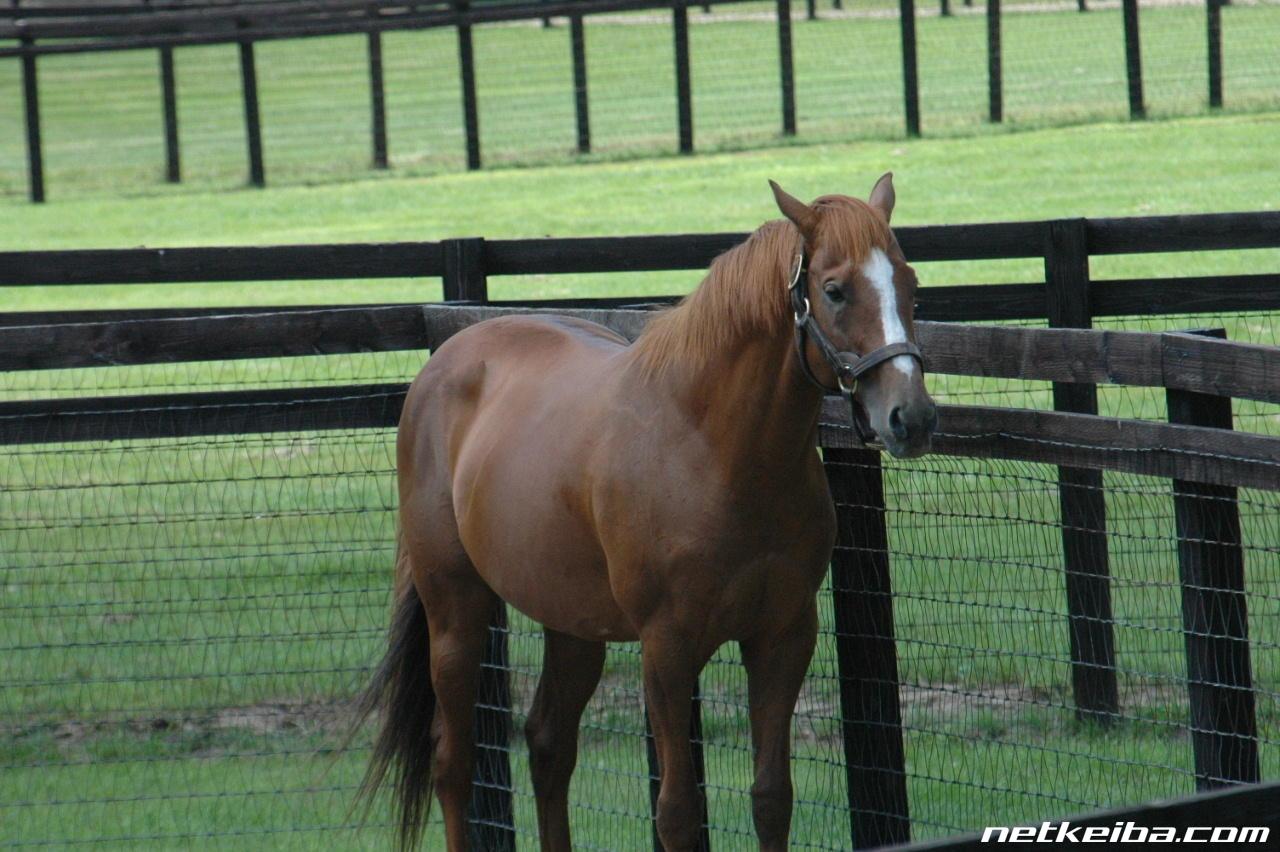
Career at a glance
Featured races
Finished 1st · G1 · at Kyoto · over 3000m · Kyoto (JP)
Finished 1st · G3 · at Kyoto · over 1800m · Kyoto (JP)
Finished 1st · G2 · at Kyoto · over 2400m · Kyoto (JP)
At a glance
Foaled on 4 April 1996, Narita Top Road was bred in Japan by Sasaki Bokujo. He was by Soccer Boy out of Floral Magic, whose sire was the American Triple Crown winner Affirmed.
Narita Top Road raced for owner Hidenori Yamaji and was trained by Yoshio Oki at Ritto. Kunihiko Watanabe was his principal jockey. Together, these connections guided him through a five-season career lasting from 1998 to 2002, during which he developed from a promising juvenile into a Classic winner and then remained competitive as an older horse.
Narita Top Road made the two starts of his juvenile campaign late in 1998. After finishing second on debut, he returned at Hanshin on 27 December and won a newcomer race over 2,000 metres on turf.
That first victory already pointed toward the qualities that would shape his career. He was not confined to short juvenile distances, and his early success over 2,000 metres provided a foundation for an ambitious three-year-old campaign.
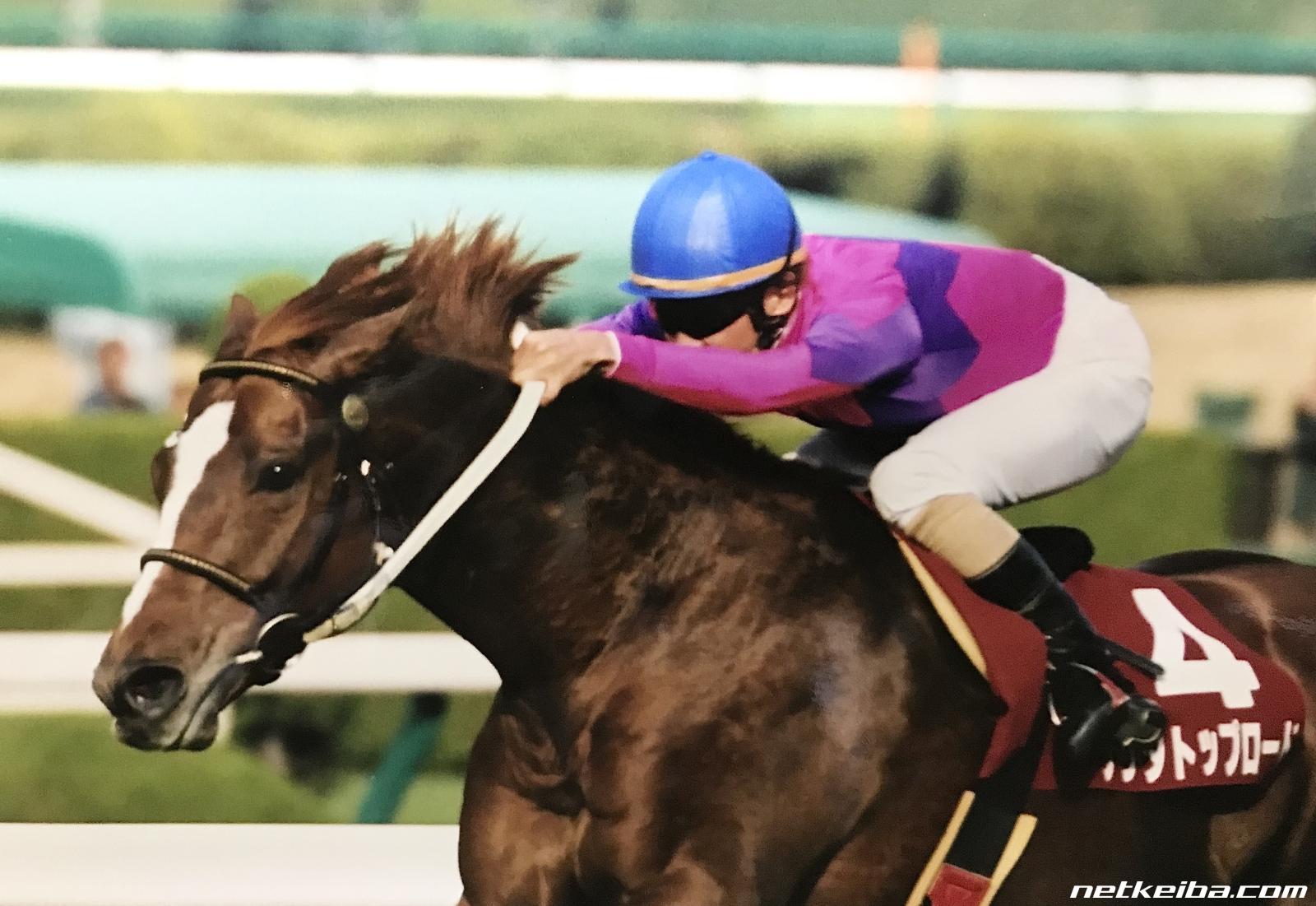
His progress accelerated early in 1999. On 7 February, Narita Top Road won the Kisaragi Sho over 1,800 metres, securing his first graded-stakes success. He then added the Yayoi Sho, establishing himself among the principal colts approaching Japan’s Classic season.
Narita Top Road belonged to a particularly notable 1999 Classic generation that also included Admire Vega and T.M. Opera O. His career would repeatedly intersect with the strength of that group. Although major victories did not always come his way, his overall record—22 first-, second- or third-place finishes from 30 starts—reflects how consistently he remained involved at a high level.
The first part of his three-year-old season showed that he possessed more than one-dimensional stamina. He could win a graded contest over 1,800 metres and then continue to improve as the distances increased. That range became important because his greatest distinction would ultimately come at the staying end of the Classic programme.
The 1999 Kikuka Sho over 3,000 metres was the central achievement of Narita Top Road’s career. Run on 7 November, the race gave him his sole Grade 1 victory and confirmed him as a Japanese Classic winner.
The Kikuka Sho is the Japanese St. Leger and places a markedly different demand on three-year-olds from the shorter races earlier in the season. Narita Top Road’s victory therefore represented both a Classic triumph and a demonstration of genuine stamina. It became the result by which he was most widely remembered, as well as the clearest expression of his long-distance profile.
His earlier wins in the Kisaragi Sho and Yayoi Sho had established his quality, but the Kikuka Sho elevated his season. It also gave him a defining success within a generation featuring Admire Vega and T.M. Opera O, two other major figures in Japanese racing around the turn of the century.
Narita Top Road continued racing beyond his Classic season, and the 2001 Hanshin Daishoten became an important second phase in his career. By winning the 3,000-metre turf race, he showed that the stamina behind his Kikuka Sho victory remained effective against older competition.
This mattered because a single long-distance Classic can stand as an isolated peak. Narita Top Road instead reproduced top-level staying form two seasons later. The Hanshin Daishoten victory reinforced his identity as a specialist over extended distances and demonstrated the durability that became one of his distinguishing characteristics.
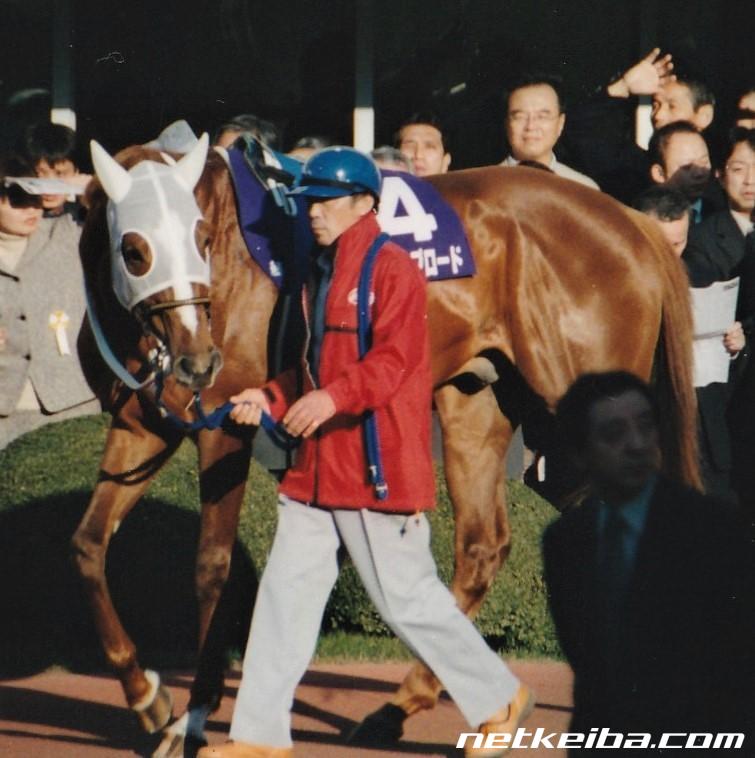
On 17 March 2002, Narita Top Road won the Hanshin Daishoten for the second consecutive year, defeating Jungle Pocket. Repeating in a major 3,000-metre event gave his staying record unusual clarity: he had now won the Kikuka Sho and two editions of the Hanshin Daishoten at the same distance.
The 2002 success also showed that he remained a major force at six. Rather than relying only on reputation built during his three-year-old season, he was still producing significant victories near the end of his racing career.
Narita Top Road’s final season was not defined solely by extreme-distance racing. He also won the Kyoto Kinen over 2,200 metres and the Kyoto Daishoten over 2,400 metres in 2002.
Those victories broadened the picture of him as a racehorse. His reputation was grounded in stamina, but his winning range extended from the 1,800 metres of the Kisaragi Sho to the 3,000 metres of his three most characteristic triumphs. The Kyoto Kinen and Kyoto Daishoten demonstrated that he retained enough pace to succeed in major middle-to-long-distance races while at the height of his older-horse form.
Narita Top Road raced as a prominent runner or pace chaser rather than as an extreme front-runner or a horse routinely held far off the pace. That stalking profile suited a campaign centred on middle and staying distances: he could remain in touch with the race before applying his stamina as the contest developed.
His results describe a particularly versatile stayer. He won graded races over:
The 3,000-metre victories form the core of his legacy, but the shorter graded wins prevent his career from being reduced to that single distance. He was effective across a broad middle-to-long-distance turf range, with his stamina becoming increasingly decisive as races lengthened.
Consistency was equally central to his reputation. From 30 starts, Narita Top Road won eight, finished second six times and third eight times. In total, he reached the first three in more than two-thirds of his races. His JRA earnings of ¥990.112 million further reflect the sustained level at which he competed throughout five racing seasons.
Narita Top Road retired after his 2002 campaign. His record combined a Japanese Classic victory with sustained older-horse success: the Kikuka Sho supplied the crowning Grade 1 moment, while the Hanshin Daishoten double and his 2002 Kyoto victories showed longevity and range.
He died on 7 November 2005, exactly six years after his Kikuka Sho triumph. His enduring racing identity rests on three connected qualities: Classic stature, proven stamina and consistent competitiveness. Within the distinguished 1999 generation, he earned a distinct place as the Kikuka Sho winner who continued to demonstrate his long-distance ability well into his older-horse career.
| Date | Race | Grade | Course | Going | Dist | Pos | Draw | Jockey | Wgt | SP | Time |
|---|---|---|---|---|---|---|---|---|---|---|---|
| 2002-12-22 |
ARIMA KINEN (47TH THE GRAND PRIX)
|
G1 | Nakayama (JP) | Good to Soft | 2500 m | 4 | 11 | K.Watanabe | 57.0 kg | 10.6 | 2:33.4 |
| 2002-11-24 | G1 | Nakayama (JP) | Good | 2200 m | 10 | 13 | H.Shii | 57.0 kg | 3.9 | 2:13.1 | |
| 2002-10-27 |
TENNO SHO (AUTUMN)
|
G1 | Nakayama (JP) | Good | 2000 m | 2 | 1 | H.Shii | 58.0 kg | 5.1 | 1:58.6 |
| 2002-10-06 |
KYOTO DAISHOTEN
|
G2 | Kyoto (JP) | Good | 2400 m | 1 | 1 | H.Shii | 59.0 kg | 1.7 | 2:23.6 |
| 2002-04-28 |
TENNO SHO (SPRING)
|
G1 | Kyoto (JP) | Good | 3200 m | 3 | 5 | K.Watanabe | 58.0 kg | 2.7 | 3:19.6 |
| 2002-03-17 |
HANSHIN DAISHOTEN
|
G2 | Hanshin (JP) | Good | 3000 m | 1 | 4 | K.Watanabe | 59.0 kg | 1.9 | 3:07.9 |
| 2002-02-16 |
KYOTO KINEN
|
G2 | Kyoto (JP) | Good | 2200 m | 1 | 9 | K.Watanabe | 60.0 kg | 5.1 | 2:11.8 |
| 2001-12-23 |
ARIMA KINEN (47TH THE GRAND PRIX)
|
G1 | Nakayama (JP) | Good | 2500 m | 10 | 5 | K.Watanabe | 57.0 kg | 7.5 | 2:33.9 |
| 2001-11-25 | G1 | Tokyo (JP) | Good | 2400 m | 3 | 10 | K.Watanabe | 57.0 kg | 14.4 | 2:24.4 | |
| 2001-10-07 |
KYOTO DAISHOTEN
|
G2 | Kyoto (JP) | Good | 2400 m | - | 4 | K.Watanabe | 59.0 kg | 2.4 | - |
| 2001-04-29 |
TENNO SHO (SPRING)
|
G1 | Kyoto (JP) | Good | 3200 m | 3 | 12 | K.Watanabe | 58.0 kg | 3.4 | 3:16.4 |
| 2001-03-18 |
HANSHIN DAISHOTEN
|
G2 | Hanshin (JP) | Good | 3000 m | 1 | 3 | K.Watanabe | 59.0 kg | 2.5 | 3:02.5 |
| 2001-02-17 |
KYOTO KINEN
|
G2 | Kyoto (JP) | Good | 2200 m | 3 | 11 | H.Matoba | 59.0 kg | 2.3 | 2:12.5 |
| 2000-12-24 |
ARIMA KINEN (47TH THE GRAND PRIX)
|
G1 | Nakayama (JP) | Good | 2500 m | 9 | 4 | H.Matoba | 57.0 kg | 7.6 | 2:35.1 |
| 2000-12-02 |
SPORTS NIPPON SHO STAYERS STAKES
|
G2 | Nakayama (JP) | Good | 3600 m | 4 | 3 | K.Watanabe | 59.0 kg | 1.3 | 3:45.9 |
| 2000-10-29 |
TENNO SHO (AUTUMN)
|
G1 | Tokyo (JP) | Soft | 2000 m | 5 | 3 | K.Watanabe | 58.0 kg | 4.9 | 2:00.5 |
| 2000-10-08 | G2 | Kyoto (JP) | Good | 2400 m | 2 | 10 | K.Watanabe | 59.0 kg | 2.6 | 2:26.0 | |
| 2000-04-30 |
TENNO SHO (SPRING)
|
G1 | Kyoto (JP) | Good | 3200 m | 3 | 11 | K.Watanabe | 58.0 kg | 3.5 | 3:17.8 |
| 2000-03-19 |
HANSHIN DAISHOTEN
|
G2 | Hanshin (JP) | Good to Soft | 3000 m | 3 | 5 | K.Watanabe | 58.0 kg | 2.9 | 3:09.8 |
| 2000-02-20 |
KYOTO KINEN
|
G2 | Kyoto (JP) | Good | 2200 m | 2 | 9 | K.Watanabe | 58.0 kg | 2.9 | 2:13.8 |
| 1999-12-26 |
ARIMA KINEN (47TH THE GRAND PRIX)
|
G1 | Nakayama (JP) | Good | 2500 m | 7 | 1 | K.Watanabe | 55.0 kg | 6.8 | 2:37.8 |
| 1999-11-07 |
KIKUKA SHO (JAPANESE ST.LEGER)
|
G1 | Kyoto (JP) | Good | 3000 m | 1 | 1 | K.Watanabe | 57.0 kg | 4.1 | 3:07.6 |
| 1999-10-17 |
KYOTO SHIMBUN HAI
|
G2 | Kyoto (JP) | Good | 2200 m | 2 | 8 | K.Watanabe | 57.0 kg | 2.8 | 2:12.3 |
| 1999-06-06 |
TOKYO YUSHUN (JAPANESE DERBY)
|
G1 | Tokyo (JP) | Good | 2400 m | 2 | 11 | K.Watanabe | 57.0 kg | 3.9 | 2:25.4 |
| 1999-04-18 |
SATSUKI SHO (JAPANESE 2000 GUINEAS)
|
G1 | Nakayama (JP) | Good | 2000 m | 3 | 8 | K.Watanabe | 57.0 kg | 3.3 | 2:00.7 |
| 1999-03-07 |
HOCHI HAI YAYOI SHO
|
G2 | Nakayama (JP) | Good to Soft | 2000 m | 1 | 12 | K.Watanabe | 55.0 kg | 4.0 | 2:03.5 |
| 1999-02-07 |
KISARAGI SHO (NHK SHO)
|
G3 | Kyoto (JP) | Good | 1800 m | 1 | 5 | K.Watanabe | 55.0 kg | 4.6 | 1:49.1 |
| 1999-01-10 |
FUKUJUSO TOKUBETSU ALW (1 Win)
|
Pre-OP | Kyoto (JP) | Good | 2000 m | 3 | 8 | K.Watanabe | 55.0 kg | 4.5 | 2:02.3 |
| 1998-12-27 |
3yo DBT
|
Maiden | Hanshin (JP) | Good | 2000 m | 1 | 12 | K.Watanabe | 54.0 kg | 1.9 | 2:04.0 |
| 1998-12-05 |
3yo DBT
|
Maiden | Hanshin (JP) | Good to Soft | 2000 m | 2 | 9 | K.Watanabe | 54.0 kg | 2.6 | 2:06.2 |
Citations
Imported and enriched race results from supported racing sources.
