
Tagged archive appearances and discovered media already linked to this draft.



AI-assisted profile
This established AI-assisted profile remains public while it moves through UmaArchive's newer editorial validation process.
This page uses the persisted profile copy. New research cannot alter its public text until an editor reviews and publishes the change.
Rose Kingdom carries herself like her name was chosen on purpose by destiny. A noble Uma Musume of the distinguished Rose Clan, she was raised with the kind of elite education that makes grandeur look effortless. Her ambition is just as formal and uncompromising: she seeks to become the “King” who lifts her family’s prestige even higher in the racing world.
It is a lofty goal, and on Rose, it feels entirely natural.
That aristocratic upbringing shapes nearly everything about her presence. She speaks of herself as Watashi, and there is a polished dignity to her image that matches her background perfectly. At the same time, the profile notes an endearing weakness beneath the regal exterior: because she grew up sheltered, she is not always familiar with ordinary everyday matters. It gives her character a charming contrast—part imposing noble, part girl who may find common life rather less obvious than the racecourse.
Visually, Rose Kingdom is all elegance with a dramatic edge. Her design leans into rose motifs and European aristocratic flair, with a formal court-style uniform and a cape adorned with rose ornaments. Her dark gray wavy bob fades to red at the ends, a subtle flourish that keeps her from looking merely proper. Then there are her eyes: pale pink, slightly drooping, and marked by distinctive ring-like pupils, which give her a soft yet uncanny intensity. At 155 cm, she is not physically towering, but her style does plenty of the work.
She is voiced by Yurina Kikuchi, and appears in Umamusume Pretty Derby as a student at Tracen Academy. Editor notes place her in Ritto Dorm, and list Rose as her nickname. Her related and rival names include Victoire Pisa, Eishin Flash, and Rulership, placing her in company that suits her stately competitive image.
A few quick profile notes:
- Japanese name: ローズキングダム
- Birthday: May 10
- Height: 155 cm
- Three sizes: B74 / W54 / H77
- Self-pronoun: Watashi
- Voice actor: Yurina Kikuchi
Tagged archive appearances and discovered media already linked to this draft.
Touch fallback
Rose KingdomTouch and smaller layouts use grouped connection cards instead of the live radar. Open any entry to follow the relationship directly.
Same races
14 shared rivals
Latest: SANKEI OSAKA HAI · 2013-03-31

Latest: JAPAN CUP · 2012-11-25
Latest: ARIMA KINEN (THE GRAND PRIX) · 2012-12-23
Latest: ARIMA KINEN (THE GRAND PRIX) · 2011-12-25
Latest: ARIMA KINEN (THE GRAND PRIX) · 2011-12-25

Latest: SANKEI OSAKA HAI · 2013-03-31

Latest: TENNO SHO (SPRING) · 2012-04-29

Latest: TAKARAZUKA KINEN · 2011-06-26

Latest: SANKEI OSAKA HAI · 2013-03-31

Latest: ARIMA KINEN (THE GRAND PRIX) · 2012-12-23

Latest: JAPAN CUP · 2012-11-25

Latest: JAPAN CUP · 2012-11-25

Latest: ARIMA KINEN (THE GRAND PRIX) · 2010-12-26

Latest: JAPAN CUP · 2010-11-28
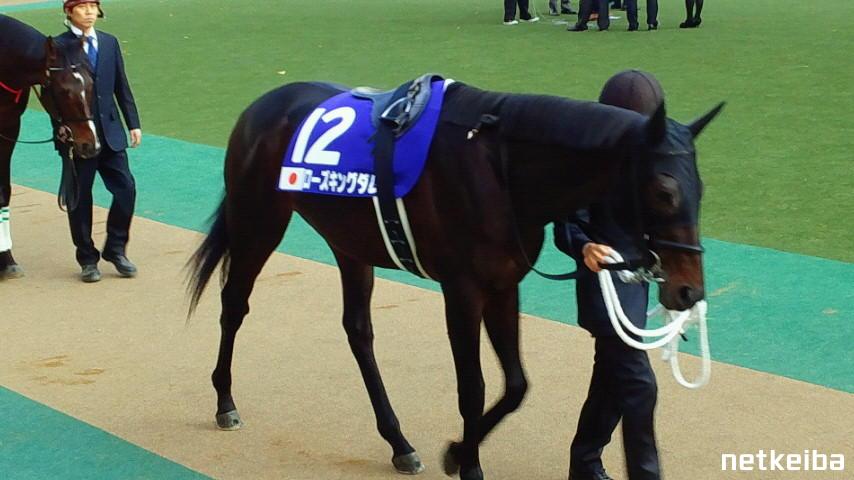
Rose Kingdom was a dark bay Japanese stallion of the late 2000s and early 2010s, bred by Northern Farm and raced throughout his career in the colours of Sunday Racing Co. Ltd. Trained at Ritto by Kojiro Hashiguchi, he developed into a high-class middle-distance performer and a major winner on one of Japan’s strongest stages.
Career at a glance
Featured races
Finished 1st · G1 · at Nakayama · over 1600m · Nakayama (JP)
Finished 1st · G1 · at Tokyo · over 2400m · Tokyo (JP)
Finished 1st · G2 · at Hanshin · over 2400m · Hanshin (JP)
At a glance
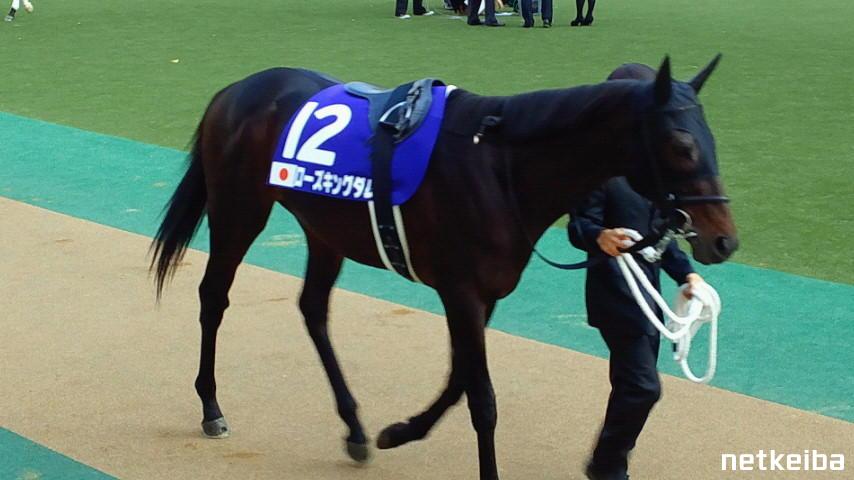
He was foaled on 10 May 2007 and retired with a record of 25 starts for 6 wins, 2 seconds and 3 thirds, earning ¥694,668,000.
He was notably well bred: by King Kamehameha out of Rosebud, a daughter of Sunday Silence. That made him part of a deep Northern Farm family, with siblings including Rosen Konig, Rosa Blanca and Rose Republic. The blend of King Kamehameha and Sunday Silence blood gave Rose Kingdom a pedigree that matched the lofty expectations surrounding a Sunday Racing runner, and he would justify much of that promise on the track.
Rose Kingdom first made his name as a top juvenile. In 2009 he won the Tokyo Sports Hai Nisai Stakes and then the Asahi Hai Futurity Stakes, a campaign that earned him the JRA Award for Best Two-Year-Old Colt. That championship marked him out early as one of the leading colts of his generation, and it established the upward arc that would carry into his classic-season racing.
At three, he added the Kobe Shimbun Hai and then secured the biggest victory of his career in the 2010 Japan Cup, a Group 1 success that defines his place in the record books. Winning the Japan Cup gave Rose Kingdom lasting historical weight, as that race stands among Japan’s most prestigious international events. He remained a durable presence beyond his three-year-old season as well, adding the Kyoto Daishoten in 2011 and showing the consistency to compete at a high level across multiple campaigns.
His career combined early championship honours with elite open-age success, a valuable mix for a Japanese colt entering retirement. Rose Kingdom was later syndicated, with netkeiba listing 40 shares at ¥2.00 million each, reflecting the commercial regard in which he was held. Even in a fiercely competitive era, his profile remains easy to recognise: a top two-year-old, a Japan Cup winner, and a horse from a major modern Japanese family who carried the Northern Farm, Sunday Racing and Hashiguchi partnership to the highest level.
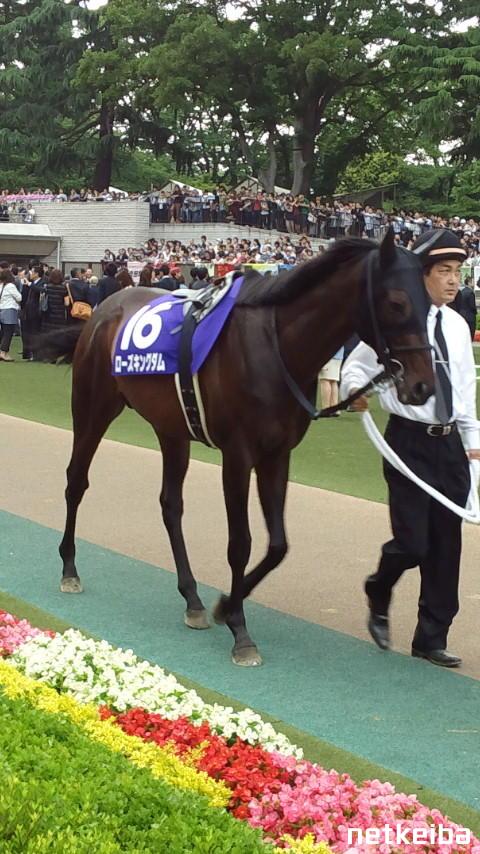
More photographs
1 more image
| Date | Race | Grade | Course | Going | Dist | Pos | Draw | Jockey | Wgt | SP | Time |
|---|---|---|---|---|---|---|---|---|---|---|---|
| 2013-05-05 |
NIIGATA DAISHOTEN
|
G3 | Ngt (JP) | Good | 2000 m | 11 | 9 | D.Matsuda | 58.0 kg | 18.6 | 1:58.2 |
| 2013-03-31 |
SANKEI OSAKA HAI
|
G2 | Hanshin (JP) | Good | 2000 m | 12 | 13 | Yuga Kawada | 57.0 kg | 116.9 | 2:00.2 |
| 2012-12-23 |
ARIMA KINEN (THE GRAND PRIX)
|
G1 | Nakayama (JP) | Good | 2500 m | 12 | 1 | Yasunari Iwata | 57.0 kg | 51.6 | 2:33.6 |
| 2012-11-25 | G1 | Tokyo (JP) | Good | 2400 m | 16 | 12 | Yutaka Take | 57.0 kg | 48.2 | 2:25.4 | |
| 2012-10-08 |
KYOTO DAISHOTEN
|
G2 | Kyoto (JP) | Good | 2400 m | 6 | 8 | F.Komaki | 57.0 kg | 3.6 | 2:23.6 |
| 2012-06-03 |
YASUDA KINEN
|
G1 | Tokyo (JP) | Good | 1600 m | 13 | 16 | Yutaka Take | 58.0 kg | 14.2 | 1:32.2 |
| 2012-04-29 |
TENNO SHO (SPRING)
|
G1 | Kyoto (JP) | Good | 3200 m | 15 | 14 | H.Goto | 58.0 kg | 44.6 | 3:15.9 |
| 2012-04-01 |
SANKEI OSAKA HAI
|
G2 | Hanshin (JP) | Good to Soft | 2000 m | 4 | 8 | H.Goto | 57.0 kg | 6.8 | 2:05.9 |
| 2011-12-25 |
ARIMA KINEN (THE GRAND PRIX)
|
G1 | Nakayama (JP) | Good | 2500 m | 12 | 8 | H.Goto | 57.0 kg | 51.1 | 2:37.1 |
| 2011-11-27 | G1 | Tokyo (JP) | Good | 2400 m | 9 | 3 | I.Mendizabal | 57.0 kg | 22.0 | 2:25.0 | |
| 2011-10-30 |
TENNO SHO (AUTUMN)
|
G1 | Tokyo (JP) | Good | 2000 m | 10 | 11 | I.Mendizabal | 58.0 kg | 6.6 | 1:57.5 |
| 2011-10-09 |
KYOTO DAISHOTEN
|
G2 | Kyoto (JP) | Good | 2400 m | 1 | 7 | H.Goto | 59.0 kg | 1.8 | 2:24.1 |
| 2011-06-26 |
TAKARAZUKA KINEN
|
G1 | Hanshin (JP) | Good | 2200 m | 4 | 9 | C.Williams | 58.0 kg | 12.1 | 2:10.4 |
| 2011-05-01 |
TENNO SHO (SPRING)
|
G1 | Kyoto (JP) | Good to Soft | 3200 m | 11 | 4 | Yutaka Take | 58.0 kg | 4.2 | 3:22.0 |
| 2011-04-02 |
NIKKEI SHO
|
G2 | Hanshin (JP) | Good | 2400 m | 3 | 9 | Yutaka Take | 59.0 kg | 3.4 | 2:25.9 |
| 2011-01-16 |
NIKKEI SHINSHUN HAI
|
G2 | Kyoto (JP) | Good | 2400 m | 3 | 5 | Yutaka Take | 58.0 kg | 2.0 | 2:24.9 |
| 2010-12-26 |
ARIMA KINEN (THE GRAND PRIX)
|
G1 | Nakayama (JP) | Good | 2500 m | - | 6 | Yutaka Take | 55.0 kg | 0.0 | - 0.0 |
| 2010-11-28 | G1 | Tokyo (JP) | Good | 2400 m | 1 | 6 | Yutaka Take | 55.0 kg | 8.8 | 2:25.2 | |
| 2010-10-24 |
KIKUKA SHO (JAPANESE ST.LEGER)
|
G1 | Kyoto (JP) | Good | 3000 m | 2 | 10 | Yutaka Take | 57.0 kg | 2.1 | 3:06.3 |
| 2010-09-26 |
KOBE SHIMBUN HAI
|
G2 | Hanshin (JP) | Good | 2400 m | 1 | 3 | Yutaka Take | 56.0 kg | 3.0 | 2:25.9 |
| 2010-05-30 |
TOKYO YUSHUN (JAPANESE DERBY)
|
G1 | Tokyo (JP) | Good | 2400 m | 2 | 8 | H.Goto | 57.0 kg | 19.5 | 2:26.9 |
| 2010-04-18 |
SATSUKI SHO (JAPANESE 2000 GUINEAS)
|
G1 | Nakayama (JP) | Good to Soft | 2000 m | 4 | 5 | F.Komaki | 57.0 kg | 6.4 | 2:01.0 |
| 2010-03-21 |
FUJI TV SHO SPRING STAKES
|
G2 | Nakayama (JP) | Good | 1800 m | 3 | 3 | F.Komaki | 56.0 kg | 1.4 | 1:48.4 |
| 2009-12-20 |
ASAHI HAI FUTURITY STAKES
|
G1 | Nakayama (JP) | Good | 1600 m | 1 | 8 | F.Komaki | 55.0 kg | 2.3 | 1:34.0 |
| 2009-11-21 |
TOKYO SPORTS HAI NISAI STAKES
|
G3 | Tokyo (JP) | Good | 1800 m | 1 | 14 | F.Komaki | 55.0 kg | 3.6 | 1:48.2 |
| 2009-10-25 |
2yo DBT
|
Maiden | Kyoto (JP) | Good | 1800 m | 1 | 1 | F.Komaki | 55.0 kg | 2.2 | 1:48.9 |
Citations
Imported and enriched race results from supported racing sources.