
Tagged archive appearances and discovered media already linked to this draft.









AI-assisted profile
This established AI-assisted profile remains public while it moves through UmaArchive's newer editorial validation process.
This page uses the persisted profile copy. New research cannot alter its public text until an editor reviews and publishes the change.
Nishino Flower (ニシノフラワー, Nishino Furawā) makes an immediate impression through contrast: a tiny Junior Division student at just 135 cm, yet one with a name and presence that feel delicate, polished, and impossible to ignore. Nicknamed Flower and Tanfura, she has the kind of image that invites softness at first glance—then lingers because of how composed and distinct she feels. Even her profile details give her a very neat, carefully arranged silhouette, from her 67-48-70 measurements to her perfectly matched 18.5 cm shoes.
She lives in Ritto Dormitory, where her roommate is Mihono Bourbon—a pairing that is memorable on its face, even before you get into any deeper character dynamics. Nishino Flower refers to herself with watashi, and calls her mentor Trainer-san, which suits the generally refined, straightforward air around her recorded profile. There is nothing flashy or exaggerated in those details; instead, they paint someone small, proper, and quietly memorable.
That sense of elegance is helped along by Haruna Kawai’s performance, which gives Nishino Flower a voice to match her compact, flowerlike image. Her official stats also carry that same tidy precision: born on 04-19, currently listed with no change in weight, and firmly placed in the Junior Division. She is a character whose charm comes less from grand declarations in the available data and more from the consistency of her presentation—everything fits, right down to the name.
Her web of connections places her among a broad mix of notable Uma Musume, including Seiun Sky, Sweep Tosho, Super Creek, Tosen Jordan, Eishin Flash, Mihono Bourbon, and Mayano Top Gun. She is also listed with Sakura Bakushin O and Yamanin Zephyr as rivals, which gives her profile a welcome edge: for all the floral sweetness suggested by her name, Nishino Flower is still a racer with clear competitive ties. That contrast—gentle image, serious racing context—is a big part of what makes her easy to remember.
A few quick profile notes:
- Birthday: 04-19
- Class: Junior Division
- Dorm: Ritto Dormitory
- Roommate: Mihono Bourbon
- Self-pronoun: Watashi
- Trainer address: Trainer-san
- Voice actor: Haruna Kawai
Sources
- umamusu.wiki — Nishino Flower
- GameTora — Nishino Flower
Tagged archive appearances and discovered media already linked to this draft.
Touch fallback
Nishino FlowerTouch and smaller layouts use grouped connection cards instead of the live radar. Open any entry to follow the relationship directly.
Same races
6 shared rivals

Latest: SPRINTERS STAKES · 1993-12-19

Latest: SPRINTERS STAKES · 1993-12-19

Latest: SWAN STAKES · 1993-10-30

Latest: TAKARAZUKA KINEN · 1993-06-13

Latest: TAKARAZUKA KINEN · 1993-06-13

Latest: SPRINTERS STAKES · 1992-12-20
2 profiles
2 profiles
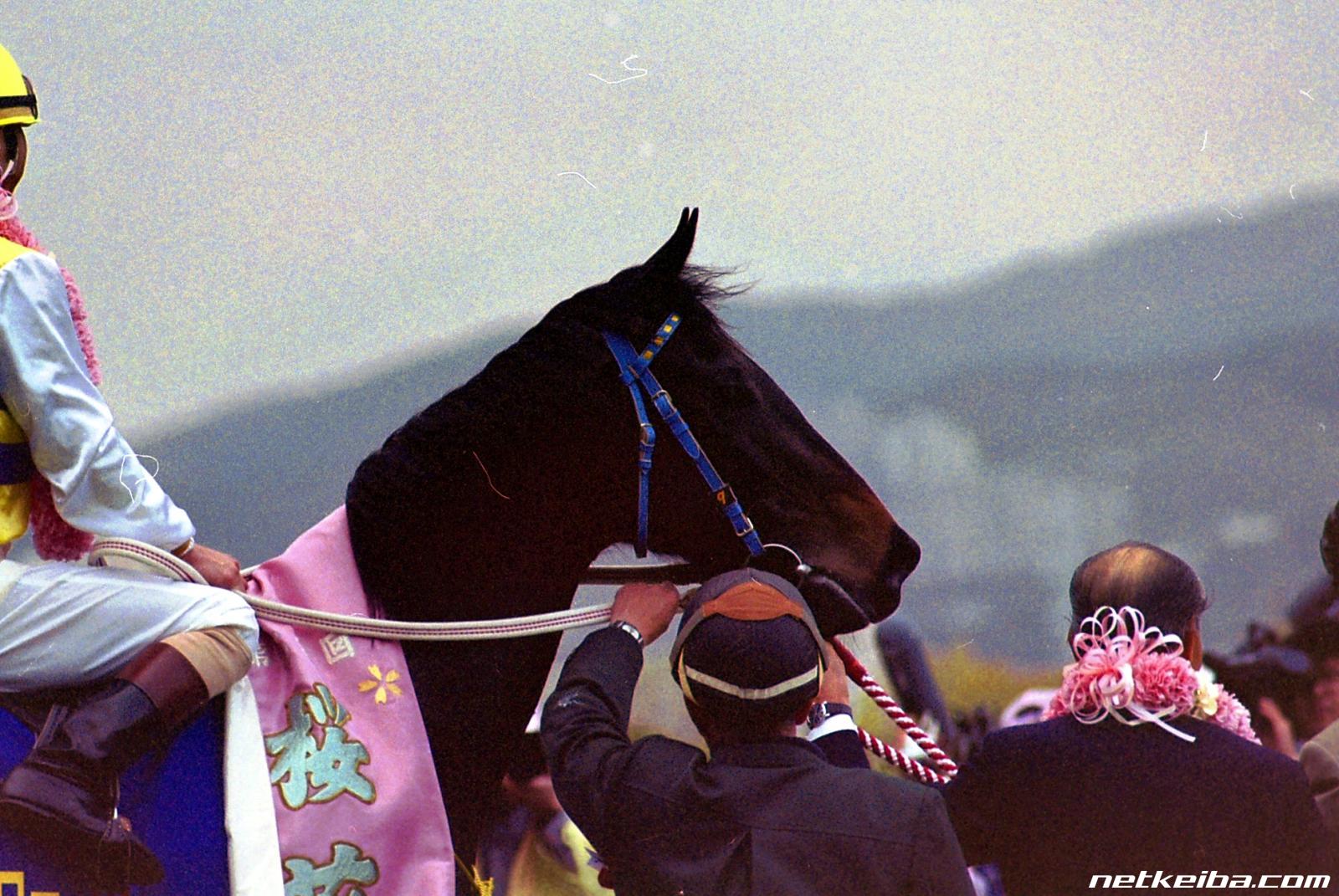
Nishino Flower was one of the standout Japanese fillies of the early 1990s, a dark bay mare bred by Nishiyama Stud and raced in the colors of M. Nishiyama. Trained by Masahiro Matsuda at Ritto, she built a compact but high-class record of 16 starts for 7 wins, 1 second, and 3 thirds, earning more than ¥435 million in JRA prize money.
Career at a glance
Featured races
Finished 1st · G1 · at Hanshin · over 1600m · Hanshin (JP)
Finished 1st · G1 · at Hanshin · over 1600m · Hanshin (JP)
Finished 1st · G1 · at Nakayama · over 1200m · Nakayama (JP)
At a glance
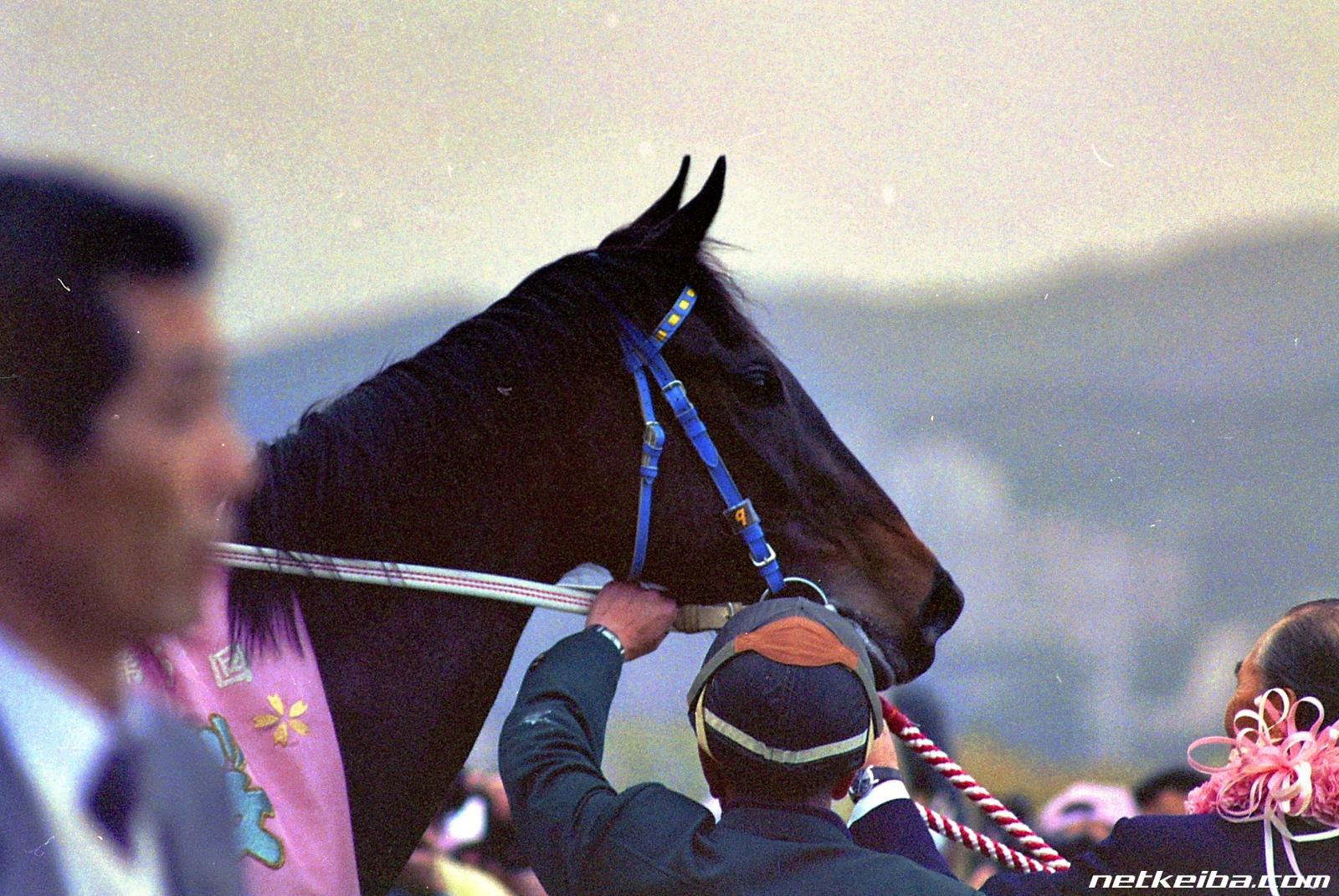
Her career ranged from top juvenile form to Classic success and later elite sprinting and miling, a breadth reflected in her championship honors.
Her background was slightly unusual. Nishino Flower was by the American sire Majestic Light out of Duplicit, a Danzig mare who had been imported to Japan while carrying the foal. That circumstance meant Nishino Flower was born in Japan on 19 April 1989 and was therefore eligible for the Japanese Classics. According to later accounts, she had seemed such a frail foal that several trainers initially turned her away before she eventually joined Matsuda’s yard, making her later achievements all the more striking.
She announced herself at two with major wins in the 1991 Daily Hai Sansai Stakes and Hanshin Sansai Himba Stakes, performances that earned her the JRA Award for Best Two-Year-Old Filly. Rather than fading after an early peak, she carried that class into her three-year-old season and captured the 1992 Oka Sho, the Japanese 1000 Guineas, confirming herself as the best of her generation among fillies.
Nishino Flower then showed that her talent was not confined to the Classic program. Over sprint and mile distances she remained among the best horses in training, taking the 1992 Sprinters Stakes and later the 1993 Yomiuri Milers Cup. Those performances helped her secure the 1992 JRA awards for both Best Three-Year-Old Filly and Best Sprinter or Miler, an unusually strong combination that speaks to her versatility as well as her quality.
Her pedigree continued to have some depth within the family, with siblings including Nishino Final, Nishino Maihime, and Brand Camellia, each a winner at a useful level. Nishino Flower herself retired as one of the notable Japanese mares of her era: a homebred who overcame an unpromising start, became a champion at two, won a Classic at three, and proved herself again against top-class sprint and mile opposition. She died on 5 February 2020.
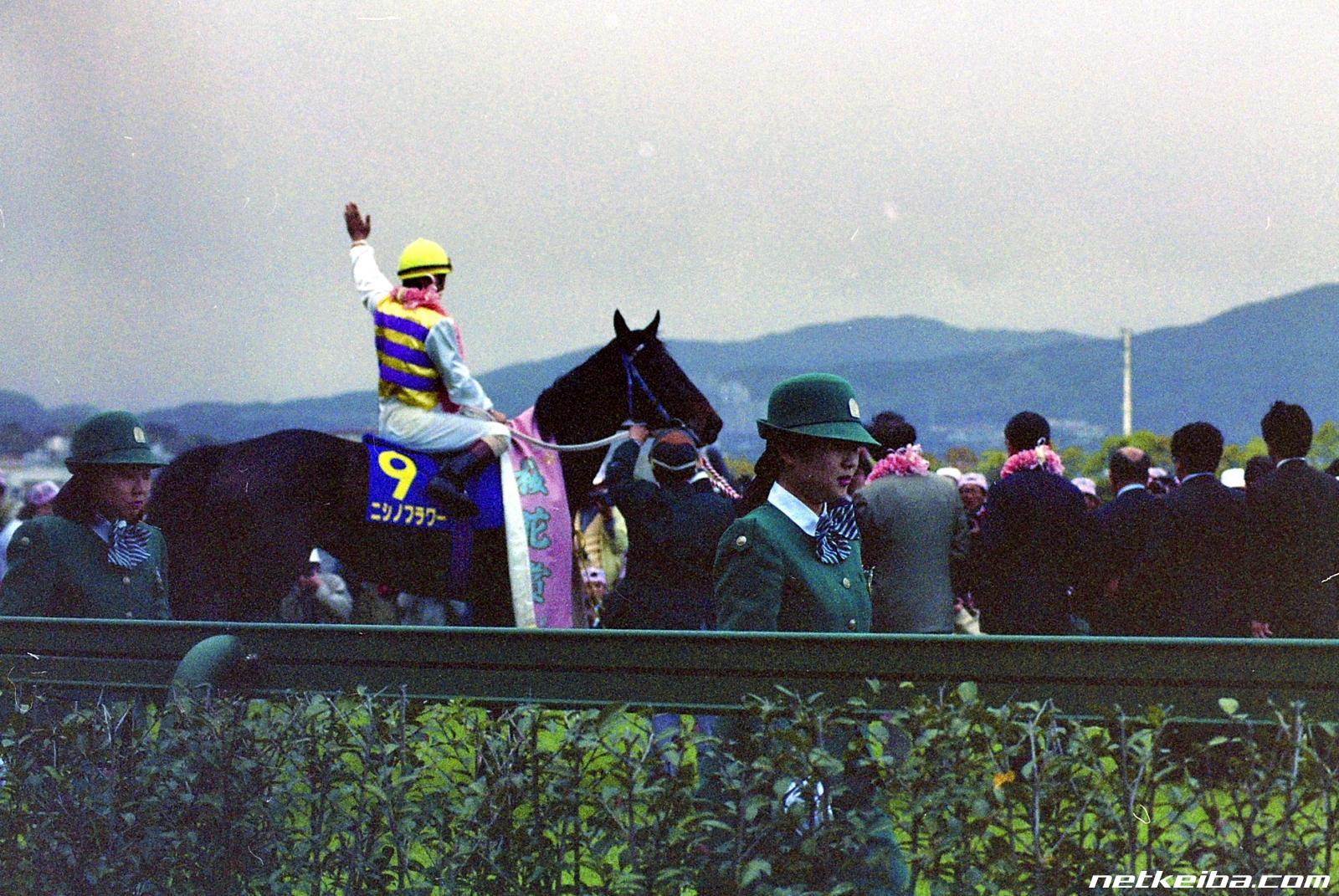
More photographs
1 more image
| Date | Race | Grade | Course | Going | Dist | Pos | Draw | Jockey | Wgt | SP | Time |
|---|---|---|---|---|---|---|---|---|---|---|---|
| 1993-12-19 |
SPRINTERS STAKES
|
G1 | Nakayama (JP) | Good | 1200 m | 3 | 2 | H.Kawachi | 55.0 kg | 5.6 | 1:08.4 |
| 1993-11-21 |
MILE CHAMPIONSHIP
|
G1 | Kyoto (JP) | Heavy | 1600 m | 13 | 14 | H.Kawachi | 55.0 kg | 3.6 | 1:36.6 |
| 1993-10-30 |
SWAN STAKES
|
G2 | Kyoto (JP) | Soft | 1400 m | 3 | 10 | H.Kawachi | 57.0 kg | 3.7 | 1:22.0 |
| 1993-06-13 |
TAKARAZUKA KINEN
|
G1 | Hanshin (JP) | Good | 2200 m | 8 | 7 | H.Kawachi | 54.0 kg | 14.5 | 2:20.9 |
| 1993-05-16 |
YASUDA KINEN
|
G1 | Tokyo (JP) | Good | 1600 m | 10 | 2 | H.Kawachi | 55.0 kg | 2.7 | 1:34.1 |
| 1993-02-28 |
YOMIURI MILERS CUP
|
G2 | Hanshin (JP) | Good | 1600 m | 1 | 3 | H.Kawachi | 56.0 kg | 2.1 | 1:36.4 |
| 1992-12-20 |
SPRINTERS STAKES
|
G1 | Nakayama (JP) | Good | 1200 m | 1 | 8 | H.Kawachi | 53.0 kg | 4.9 | 1:07.7 |
| 1992-11-15 |
Queen Elizabeth II Cup
|
G1 | Kyoto (JP) | Good | 2400 m | 3 | 2 | H.Kawachi | 55.0 kg | 12.4 | 2:27.7 |
| 1992-10-25 |
Rose Stakes
|
G2 | Kyoto (JP) | Good | 2000 m | 4 | 8 | H.Kawachi | 55.0 kg | 3.4 | 2:00.8 |
| 1992-05-24 |
Yushun Himba (Japanese Oaks)
|
G1 | Tokyo (JP) | Good | 2400 m | 7 | 10 | H.Kawachi | 55.0 kg | 3.0 | 2:29.5 |
| 1992-04-12 |
Oka Sho (Japanese 1000 Guineas)
|
G1 | Hanshin (JP) | Good | 1600 m | 1 | 9 | H.Kawachi | 55.0 kg | 2.3 | 1:37.5 |
| 1992-03-15 |
Tulip Sho OP
|
OP | Hanshin (JP) | Good to Soft | 1600 m | 2 | 8 | M.Sato | 54.0 kg | 1.2 | 1:39.1 |
| 1991-12-01 |
Hanshin Sansai Himba Stakes
|
G1 | Hanshin (JP) | Good | 1600 m | 1 | 4 | M.Sato | 53.0 kg | 1.9 | 1:36.2 |
| 1991-11-02 |
Daily Hai Sansai Stakes
|
G3 | Kyoto (JP) | Good | 1400 m | 1 | 9 | S.Tabara | 53.0 kg | 3.5 | 1:23.2 |
| 1991-07-28 |
Sapporo Sansai Stakes
|
G3 | Sapporo (JP) | Good | 1200 m | 1 | 1 | M.Sato | 53.0 kg | 10.4 | 1:10.5 |
| 1991-07-07 |
3yo DBT
|
Maiden | Sapporo (JP) | Good | 1000 m | 1 | 5 | M.Sato | 53.0 kg | 6.5 | 0:59.8 |
Citations
Imported and enriched race results from supported racing sources.

