
Tagged archive appearances and discovered media already linked to this draft.
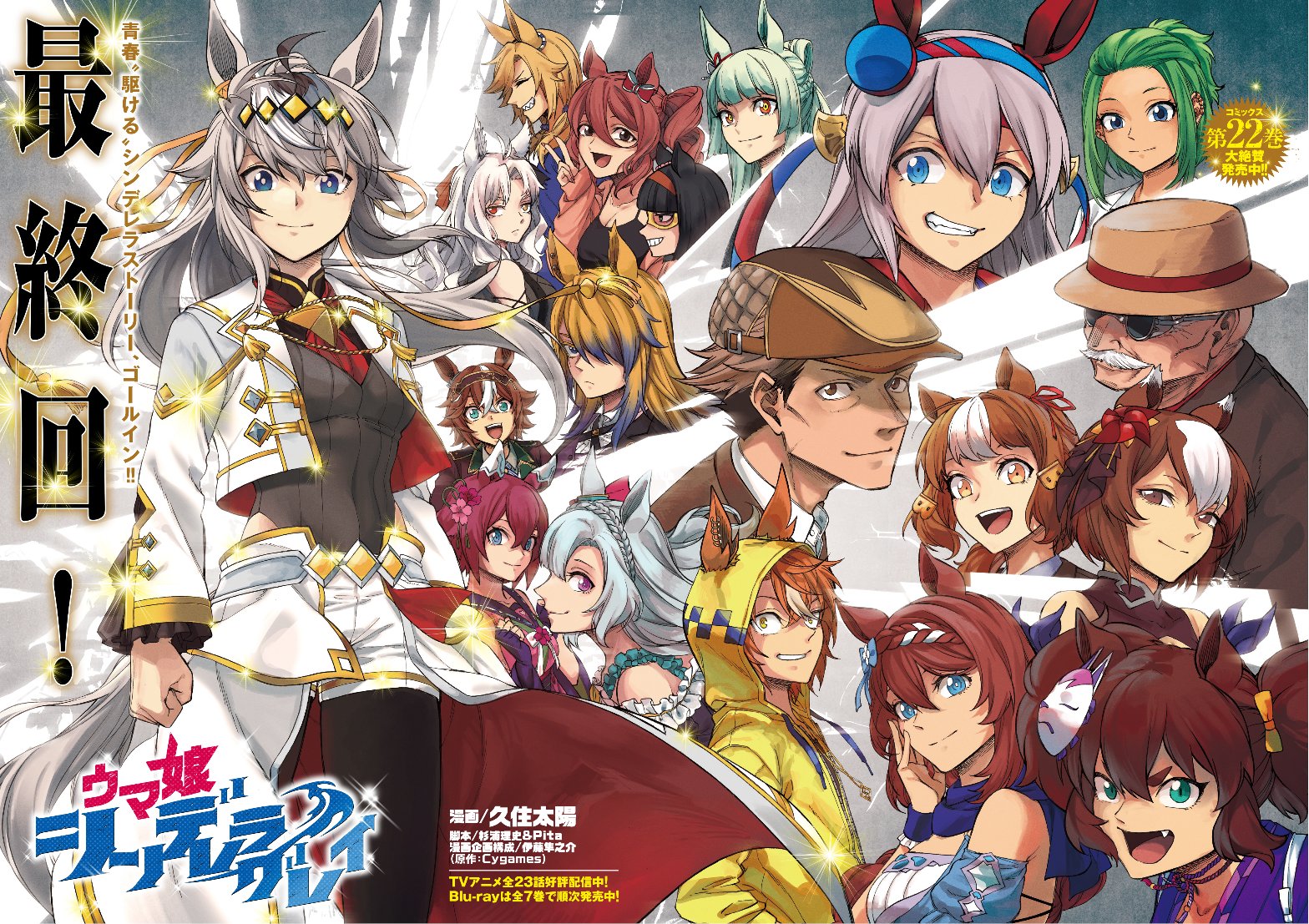


AI-generated draft
This profile was created using UmaArchive's AI-assisted research pipeline and will remain outside search indexing until an editor approves it.
This unapproved preview can include facts and copy from the latest saved research bundle. It is excluded from search indexing until an editor validates the persisted profile.
Folkqueen (フォークイン) is a proud, fierce New Zealand Uma Musume introduced in Umamusume: Cinderella Gray. A health enthusiast with a fondness for hot springs, she makes an especially memorable impression as the imposing—and wonderfully nicknamed—“Health Land Master.”
Standing at 150 cm, Folkqueen proves that presence is not measured in centimeters. She competes abroad while carrying the expectations of her homeland, bringing a sharp competitive spirit to the second Japan Cup depicted in Cinderella Gray. There, she faces Oguri Cap as a rival on one of the series’ grandest international stages.
Her formidable image comes with an unexpectedly charming specialty: wellness. Folkqueen’s enthusiasm for health and love of visiting hot springs give her character a distinctive contrast—part fierce overseas challenger, part dedicated connoisseur of restorative relaxation. The “Health Land Master” nickname was bestowed on her by Oguri Cap, neatly capturing that unusual combination.
Folkqueen is associated with Ellerslie Pride, described in available profiles as her older sister or sister figure. Her own birthday is October 7, and her role remains that of a manga-exclusive foreign competitor.
Tagged archive appearances and discovered media already linked to this draft.
Known in racing as Horlicks, Folkqueen’s real-life counterpart was a New Zealand-bred grey mare whose defining achievement came in the 1989 Japan Cup, where she defeated Japanese star Oguri Cap. A 17-time winner from 40 starts, she developed from a domestic Group 1 performer into an international middle-distance winner and was later inducted into the New Zealand Racing Hall of Fame.
At a glance
Horlicks was foaled in New Zealand on 7 October 1983. She was bred and owned by Graham de Gruchy, giving her career a notable continuity: the breeder who produced her also retained the mare as she progressed from her home country’s racing circuit to one of the most important international victories achieved by a New Zealand horse of her era.
She was by Three Legs out of Malt, whose sire was Moss Trooper. Horlicks was a grey mare, an immediately recognizable characteristic that remained part of her public identity throughout a career spanning the late 1980s and the opening of the 1990s.
Her training was handled by Dave O’Sullivan and Paul O’Sullivan. Under their care, she compiled a record of 40 starts and 17 victories. Her principal successes came over middle distances, with her career ultimately extending well beyond New Zealand through international competition.
Horlicks made her racecourse debut in a maiden on 30 December 1986. That first appearance began a substantial 40-start campaign rather than a brief ascent built around only a handful of races. Across the following seasons, she won 17 times and established herself first at home and then overseas.
The major domestic breakthrough recorded in her career came in the 1988 Television New Zealand Stakes. Her victory there was significant as a Group 1 success, placing her among New Zealand’s leading performers before she undertook the international assignment that would define her reputation.
By 1989, Horlicks was representing New Zealand on a much larger stage. Her trip to Japan brought her into direct competition with Oguri Cap, one of the central Japanese racehorses of the period, in the Japan Cup. Victory in that race transformed her from an accomplished New Zealand Group 1 mare into an internationally recognized winner.
Horlicks continued racing after the Japan Cup triumph. Her career concluded in October 1990 with the Cox Plate as her final start, bringing to an end a racing record that had encompassed domestic success, travel abroad and a landmark win against elite international opposition.
The 1988 Television New Zealand Stakes provided Horlicks with a Group 1 victory on home soil. It was an important step in the chronology of her career, demonstrating that she had developed beyond her maiden beginnings into a leading-level New Zealand performer.
The race also forms the essential prelude to her international reputation. Horlicks did not arrive at the following year’s Japan Cup merely as a travelling outsider with little established form; she had already secured top-level success in New Zealand. Her domestic Group 1 standing gave substance to the overseas campaign that followed.
The 1989 Japan Cup was Horlicks’s defining performance and the achievement around which her legacy is most clearly built. Racing in Japan against an international field, she finished first and defeated Oguri Cap. The result made her a Japan Cup winner and gave New Zealand racing a prominent success on one of the sport’s major international stages.
The identity of the rival she beat adds considerably to the race’s continuing resonance. Oguri Cap was the Japanese runner at the heart of the contest, and Horlicks’s victory placed the New Zealand mare directly into his racing story. It is also this result that underpins the association between Horlicks and Folkqueen: Folkqueen represents New Zealand in the depiction of Oguri Cap’s second Japan Cup, recreating the competitive role occupied by Horlicks in the real 1989 race.
For Horlicks herself, the Japan Cup was more than another addition to a strong win total. It became the result by which an already accomplished mare was remembered internationally. Her 17 career victories included a home Group 1, but winning abroad against Oguri Cap supplied a distinct historical identity that extended far beyond her domestic record.
Horlicks’s final race came in the Cox Plate in October 1990. Its importance lies in its position as the closing point of her racing career rather than as another recorded victory. The appearance completed a competitive span that had begun in a maiden in December 1986 and developed through New Zealand Group 1 company to major international racing.
Ending her career in the Cox Plate also reflected the scope of her later campaigns. By retirement, she had competed not only as a successful New Zealand mare but as an established international middle-distance performer whose defining result had come away from home.
The partnership surrounding Horlicks joined breeder and owner Graham de Gruchy with trainers Dave and Paul O’Sullivan. De Gruchy’s continued ownership connected her breeding background directly to her racing achievements, while the O’Sullivan training team guided her through the progression from her 1986 debut to Group 1 success and international competition.
Her numerical record—17 wins from 40 starts—shows both durability and sustained effectiveness. Horlicks’s standing was not founded solely on one exceptional afternoon, even though the Japan Cup became her signature achievement. The Television New Zealand Stakes established her at Group 1 level, and the length of her career provided a broader foundation for her reputation.
Horlicks is best characterized as a middle-distance mare. The major races central to her story, particularly the Japan Cup and her final appearance in the Cox Plate, place her legacy firmly within elite middle-distance competition. Her grey colour, New Zealand origin and success abroad became the concise markers of an unusually international career.
Folkqueen—Japanese name フォークイン—is an Uma Musume: Cinderella Gray character rather than Horlicks’s registered racing name. The identification of Horlicks as Folkqueen’s real-life counterpart is fan-assumed rather than officially confirmed, but it rests on a close correspondence in role and biography.
Folkqueen is presented as a New Zealand competitor connected with Oguri Cap’s second Japan Cup. In the real 1989 running, it was the New Zealand mare Horlicks who defeated Oguri Cap. Folkqueen’s New Zealand birthplace and 7 October birthday further align with Horlicks, who was foaled in New Zealand on 7 October 1983.
That association gives Horlicks’s Japan Cup victory a second form of cultural remembrance. The race remains central not only to her historical profile as a Thoroughbred but also to the way the international contest is reinterpreted through Folkqueen’s place in the Oguri Cap narrative.
After her final start in October 1990, Horlicks entered the next phase of her life as a broodmare. Her recorded offspring included Brew, Bubble and Latte, extending her name into another generation after her racing career had ended.
Her broader standing was recognized through induction into the New Zealand Racing Hall of Fame. That honour accords with the two dimensions of her career: she was a Group 1 winner within New Zealand and an international standard-bearer whose greatest success came in Japan.
Horlicks died on 24 August 2011. Her enduring reputation remains anchored by the 1989 Japan Cup—the race in which a New Zealand-bred grey mare defeated Oguri Cap and secured a place in international racing history. The continuing Folkqueen association has introduced that accomplishment to another audience, but the foundation of the legacy is Horlicks’s own: 40 starts, 17 wins, domestic Group 1 distinction and a career-defining victory abroad.
No track data
This placeholder does not have race history loaded into the archive yet.
Citations
Imported and enriched race results from supported racing sources.