
Tagged archive appearances and discovered media already linked to this draft.
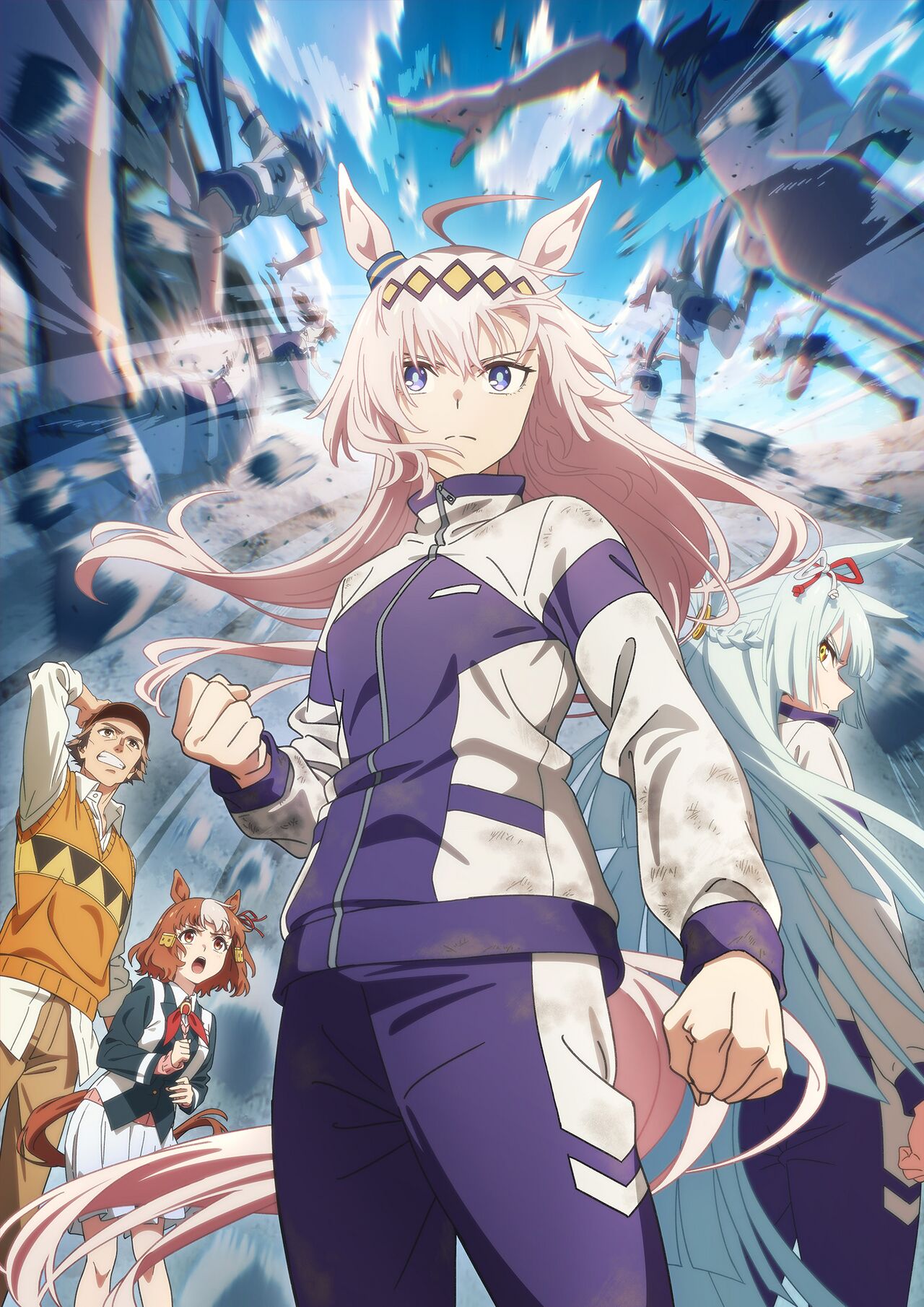


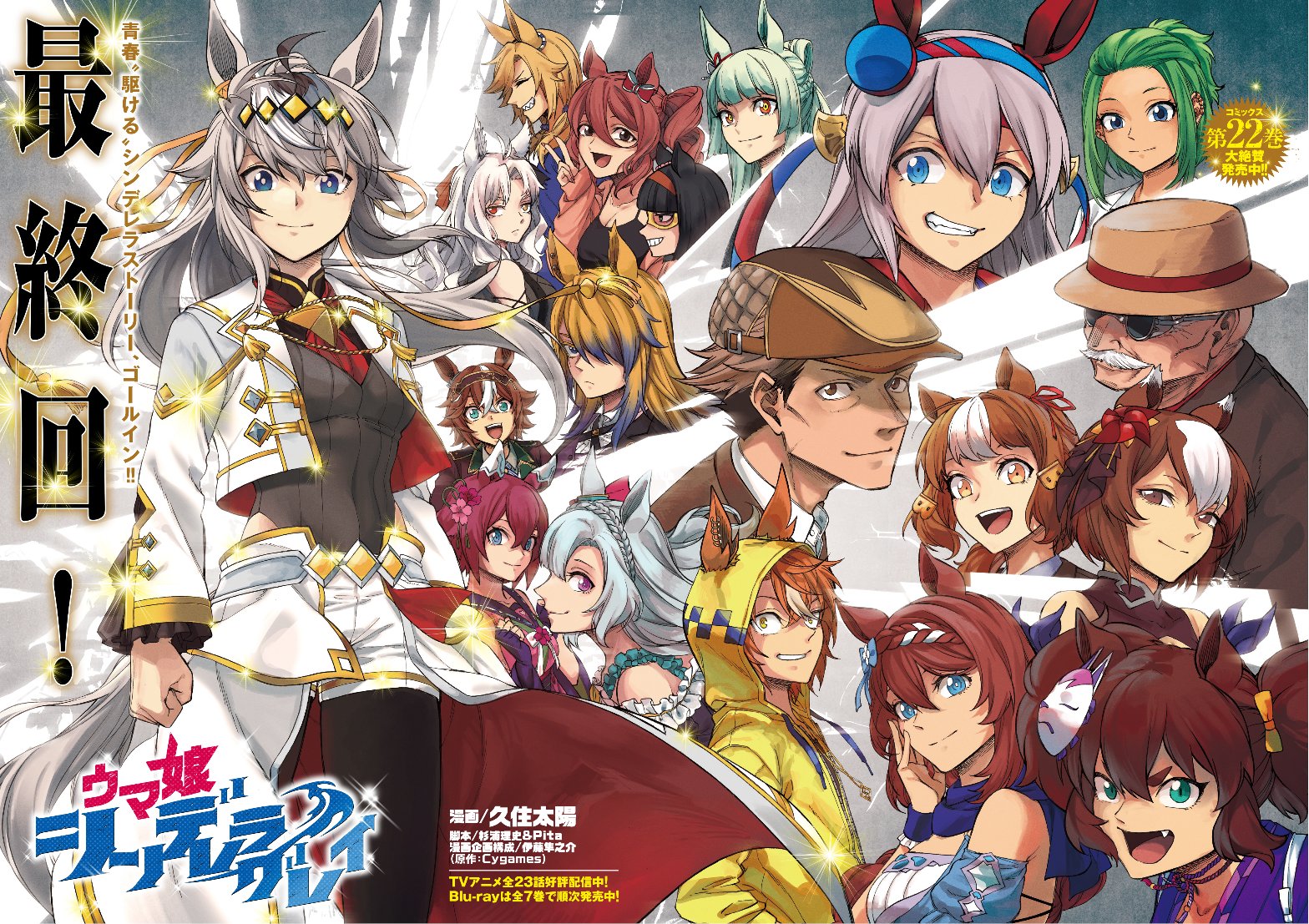


AI-generated draft
This profile was created using UmaArchive's AI-assisted research pipeline and will remain outside search indexing until an editor approves it.
This unapproved preview can include facts and copy from the latest saved research bundle. It is excluded from search indexing until an editor validates the persisted profile.
Belno Light (ベルノライト), often called Belno, is a student and trainee support staff member in Umamusume: Cinderella Gray. Oguri Cap’s teammate and close supporter, she stands out for her sharp analytical mind, deep command of racing equipment, and talent for turning practical knowledge into dependable support.
Belno’s expertise has firm roots: her family operates a major sporting-goods chain specializing in equipment for Umamusume. That background gives her an unusually broad understanding of racing gear, making her more than simply a friendly presence at Oguri Cap’s side—she is a well-informed, attentive teammate whose value lies in preparation as much as encouragement.
Her affiliations span both Tracen Academy and, formerly, Kasamatsu Tracen Academy. Within that world of fierce competition, Belno occupies a distinctive role: part student, part support specialist, and a steady analytical force behind the action.
At 146 cm, Belno has a compact stature, with listed measurements of B89-W53-H77. Her birthday is May 22, and she is voiced by Momoko Seto.
Tagged archive appearances and discovered media already linked to this draft.
Belno Light is the name of a fictional Uma Musume character whose reported real-life basis is the Japanese mare Twin Bee. A chestnut foaled in 1985, Twin Bee was a durable Kasamatsu regional racer who won 10 of her 45 starts, earned ¥13,756,000 and recorded her principal success in the 1990 Kasamatsu All-Comers.
At a glance
Twin Bee was foaled on 22 May 1985 in Urakawa, Hokkaido, an important centre of Japanese Thoroughbred breeding. She was bred by Tadao Unoki and raced for owner Fumitoshi Amano.
She was a daughter of Nice Dancer and the mare Hiraku Ryu. Her damsire was Danseur, placing another strand of the Dancer line on the maternal side of her pedigree.
The mare later associated with Belno Light remained closely identified with one regional racing environment. Trained at Kasamatsu by Ryo Miyashita, she reportedly spent her entire racing career there rather than moving between regional and central circuits.
Twin Bee began racing at two, making her first start on 10 October 1987. Her career unfolded during the late 1980s, when Kasamatsu Racecourse was also the starting point for Oguri Cap, one of the defining Japanese racehorses of the era.
Although Twin Bee and Oguri Cap belonged to the same generation and shared a connection to Kasamatsu, they did not meet in a race. Their careers instead developed on different paths: Oguri Cap advanced from the regional circuit to national prominence, while Twin Bee remained a Kasamatsu campaigner.
Her longevity became one of the defining features of her record. Between October 1987 and October 1990, she made 45 starts, winning 10 times. That total represents a winning rate of slightly more than 22 per cent and reflects a substantial workload across roughly three racing seasons.
Twin Bee’s first race, on 10 October 1987, marked the beginning of a career conducted within Kasamatsu’s regional programme. Rather than a brief campaign or an early move to another circuit, it opened a sustained run of racing that eventually extended to 45 appearances.
That continuity is central to understanding her profile. Twin Bee’s record was built through repeated competition at her home course, making her a representative example of the experienced regional horses who supplied the depth of Japan’s local racing scene.
Reaching 10 wins was the broadest measure of Twin Bee’s competitive success. The achievement was accumulated over several seasons rather than defined by a single short peak, and it gave her a clear identity as more than merely a frequent starter.
Her 45-race record also provides context for the total. Twin Bee combined regular campaigning with enough consistency to turn more than one in five appearances into victories, ultimately earning ¥13,756,000.
Twin Bee’s most important named victory came in the 1990 Kasamatsu All-Comers. The result stands as the principal win attached to her career and supplied its clearest individual highlight.
It was also a late-career achievement. By 1990, Twin Bee had been racing since the autumn of 1987, so the All-Comers success represented a culmination of the experience she had acquired through repeated Kasamatsu competition. Rather than being remembered only for durability, she closed the arc of her racing life with a notable home-course prize.
Twin Bee made her last start on 4 October 1990. The date brought to an end a career lasting just under three years from debut to final appearance. Across that period, she had remained tied to Kasamatsu, amassed 45 starts and reached double figures in victories.
Twin Bee’s racing connections were rooted in regional competition. Fumitoshi Amano owned her, while Ryo Miyashita trained her at Kasamatsu. Together with breeder Tadao Unoki of Urakawa, these connections frame a career that linked Hokkaido’s breeding industry with the local racing circuit in Gifu Prefecture.
The most notable historical comparison is with Oguri Cap. Both were foaled in 1985 and had Kasamatsu associations, but their records should not be conflated: Twin Bee never raced against him. Her significance lies on the regional side of that shared setting, as a 10-time winner who continued to compete at Kasamatsu after Oguri Cap’s career had taken him onto a larger national stage.
No particular distance preference or habitual running position is attached to Twin Bee’s surviving profile. Her established racing identity instead rests on measurable features: a long Kasamatsu campaign, 45 starts, 10 victories and a principal success achieved in her final season.
Belno Light is not the racing name under which Twin Bee competed. The connection between them is an unofficial, community-reported identification: Twin Bee is presented as a possible real-life equine basis for the fictional character rather than as a horse registered under the name Belno Light.
The character is portrayed through traits such as studiousness, supportiveness and specialist knowledge of racing equipment. That conception is also reported to draw on Masaru Minowa, a farrier associated with Oguri Cap. Belno Light’s creative background therefore appears to combine two different Kasamatsu-linked influences: Twin Bee as the proposed horse reference and Minowa as an influence on the character’s equipment-support role.
This layered association helps explain why Belno Light differs from fictional racehorse characters whose identities correspond directly to a single registered Thoroughbred. The character’s link to Twin Bee preserves the outline of a contemporary Kasamatsu mare, while the farrier influence places greater emphasis on technical knowledge and support work.
Twin Bee’s racing record ended in October 1990 after 10 victories and earnings of ¥13,756,000. She subsequently became a broodmare, with Peter Queen recorded among her progeny.
Her later recognition is closely connected to the reported Belno Light association. Twin Bee’s own record is that of a durable regional mare whose career was concentrated at one racecourse and capped by the 1990 Kasamatsu All-Comers. The fictional connection has given that record a new audience, while her contemporary relationship to Oguri Cap’s generation places her within one of the most widely remembered periods in Kasamatsu racing history.
No track data
This placeholder does not have race history loaded into the archive yet.
Citations
Imported and enriched race results from supported racing sources.