
Tagged archive appearances and discovered media already linked to this draft.





AI-assisted profile
This established AI-assisted profile remains public while it moves through UmaArchive's newer editorial validation process.
This page uses the persisted profile copy. New research cannot alter its public text until an editor reviews and publishes the change.
Ines Fujin is the kind of girl who arrives at full speed and means every bit of it. A Senior Division Uma Musume from Miho Dormitory, she introduces herself with bright, unmissable enthusiasm and a simple, driving purpose: to work hard, race harder, and make her family proud. That core motivation gives her a warm, grounded center beneath all the energy.
She is not just lively for show; she is earnest, determined, and clearly pushing herself for people she loves.
That family-minded side shows up all over her character details. She calls herself Atashi, and even Ines Onee-chan, which fits neatly with the big-sister flavor in her profile notes. Her ears perk up at the sound of children’s voices, and her tail is apparently so used to years of sibling antics that being grabbed no longer fazes it. Even the little household rule attached to her family leaves a vivid impression: when they go out, they always hold hands. It paints Ines as someone bustling, affectionate, and deeply shaped by home.
She also has a practical streak that keeps her from feeling one-note. Her strong point is quick and easy recipes, which suits her energetic, no-time-to-waste image perfectly. On the other hand, she has a weakness for splurging, and she struggles when people ask her for help—not because she refuses, but because she cannot say no. That combination makes her especially easy to picture: capable, active, maybe a little overextended, and too soft-hearted to turn others away. Even her weight note, “a bit heavier than last time (too many protein bars?),” adds a touch of cheerful self-awareness rather than vanity.
Ines stands 167 cm tall, with a recorded three-size measurement of 88-58-84 and an unusual shoe size split of left 24.0 cm and right 24.5 cm. She shares a room with Mejiro Ryan, and Ryan also appears among her listed rivals alongside Mejiro McQueen, giving that connection an extra bit of competitive spark. Other associated names include Daitaku Helios, Smart Falcon, Mihono Bourbon, Silence Suzuka, and Maruzensky. Her voice is provided by Rika Nagae, whose casting helps carry Ines’s mix of pep, warmth, and straightforward sincerity.
A few quick profile notes:
- Birthday: April 10
- Dorm: Miho Dormitory
- Roommate: Mejiro Ryan
- Self-pronouns: Atashi, Ines Onee-chan
- Best at: Quick and easy recipes
- Weaknesses: Splurging, and being unable to refuse requests for help
There is a charming bit of history attached to her, too: Ines Fujin’s initial character profile was uploaded on the official Twitter account on May 18, 2017 as part of a character name prediction quiz. It is a fittingly lively footnote for a girl who feels defined by momentum. Ines is bright, busy, family-driven, and hard-working to the point of throwing her whole self into the effort—a spirited presence with a big-sister heart and no shortage of hustle.
Tagged archive appearances and discovered media already linked to this draft.
Touch fallback
Ines FujinTouch and smaller layouts use grouped connection cards instead of the live radar. Open any entry to follow the relationship directly.
Same races
1 shared rival
3 profiles
1 profile
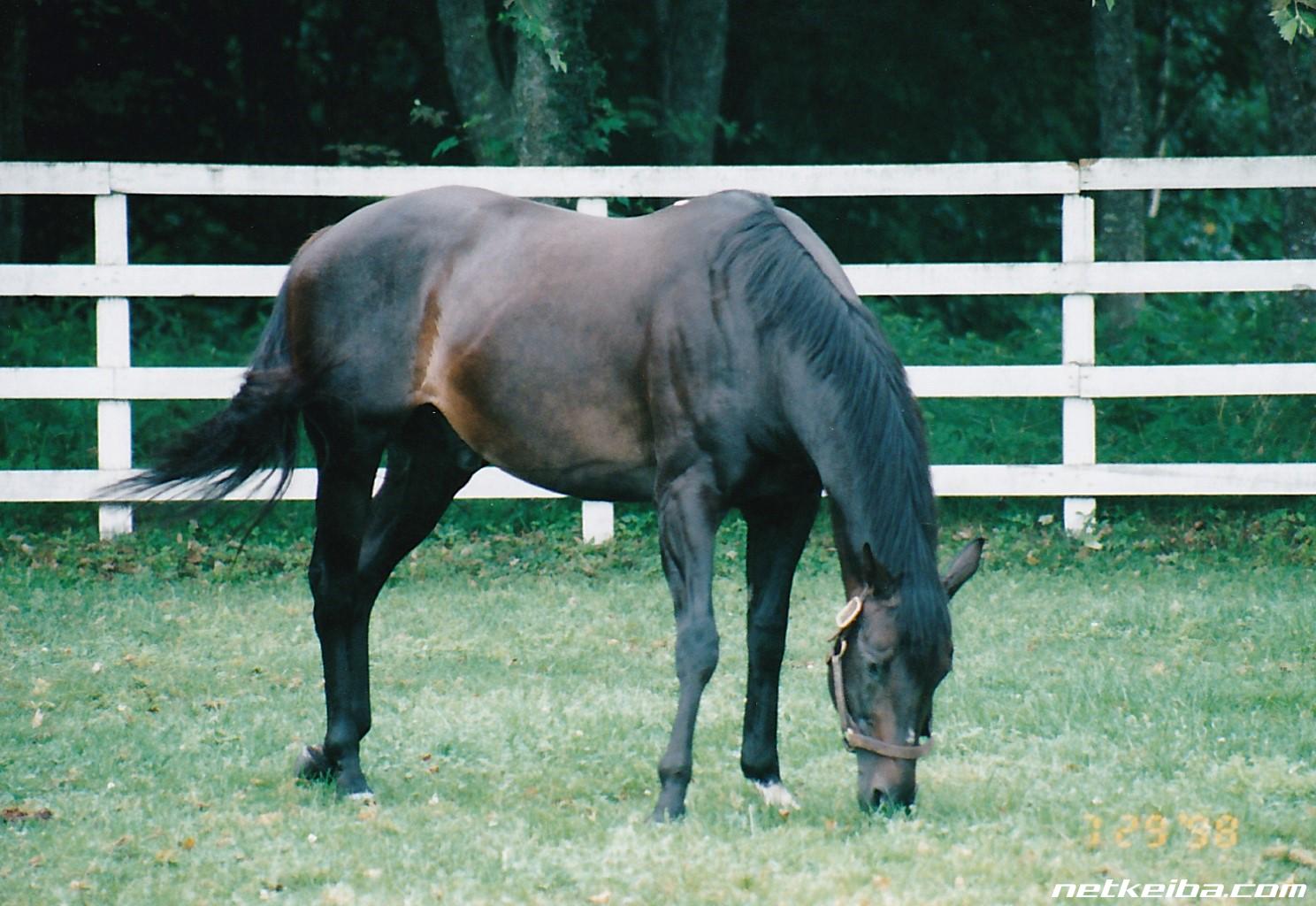
Ines Fujin (アイネスフウジン) was a dark bay Japanese stallion of the late 1980s and early 1990s, bred by Kozo Nakamura and campaigned by owner Masaaki Kobayashi. Trained at Miho by Shuho Kato and ridden by Eiji Nakano, he packed a remarkable amount of achievement into a brief racing career. From just eight starts, he compiled a record of 4 wins and 3 seconds, a compact résumé that still placed him among the leading colts of his generation.
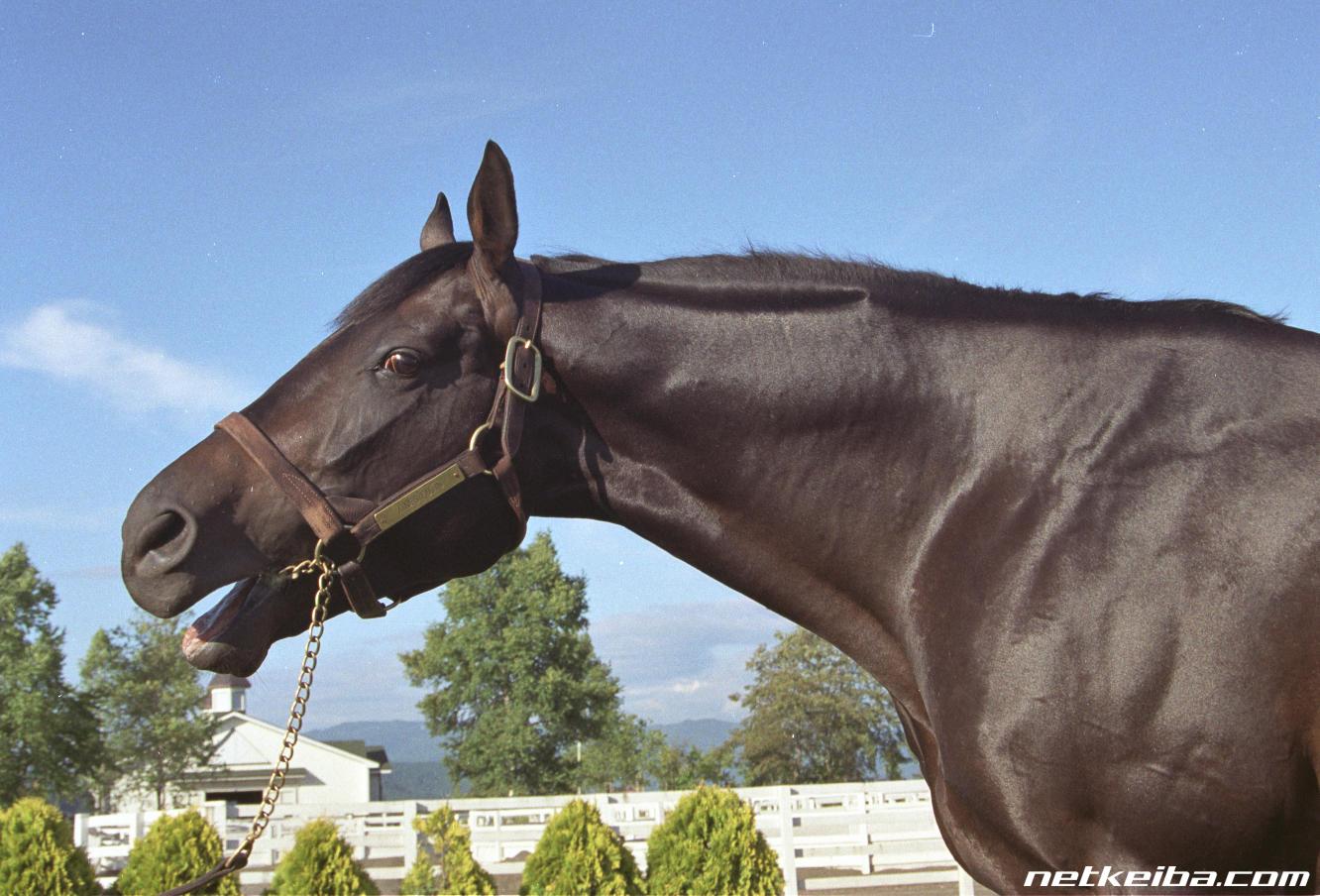
Career at a glance
Featured races
Finished 1st · G1 · at Nakayama · over 1600m · Nakayama (JP)
Finished 1st · G1 · at Tokyo · over 2400m · Tokyo (JP)
Finished 1st · G3 · at Tokyo · over 1800m · Tokyo (JP)
At a glance
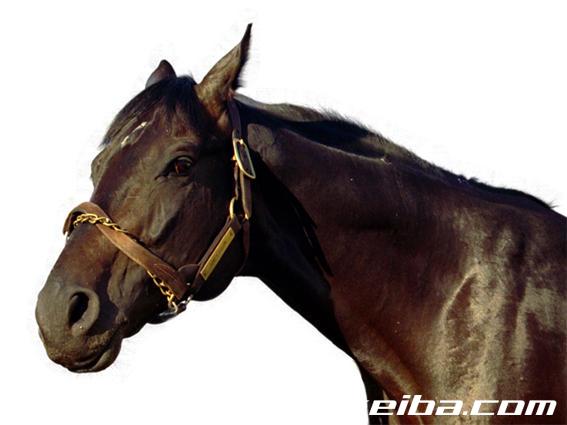
His background tied him to a distinctly domestic Japanese pedigree: he was by Sea Hawk out of Tesco Pearl, with Tesco Boy as his damsire. That breeding, combined with the Nakamura breeding program and the steady handling of Kato’s yard, produced a colt who quickly rose to national prominence. While no detailed running-style evidence is provided in the surviving research, the results themselves show a horse of high class and consistency.
Ines Fujin announced himself at two with victory in the 1989 Asahi Hai Sansai Stakes, one of Japan’s key juvenile prizes. That performance helped earn him the JRA Best Two-Year-Old Colt title for 1989, marking him out early as the standout male juvenile of the season. He did not fade with age, either: at three, he captured the 1990 Japan Derby, the most historically resonant race for a Japanese classic colt and the defining success of his career.
That Derby triumph secured more than a single great afternoon. It underpinned his selection as JRA Best Three-Year-Old Colt for 1990, giving him championship honors at both two and three. Few horses manage to dominate consecutive seasons in that way, and Ines Fujin’s double award record is the clearest measure of his status in the era. His earnings are listed as ¥236.00 million in JRA figures, with another source reporting total earnings of 244,400,000 yen.
After retirement, Ines Fujin lived on until 5 April 2004. Even with a relatively short race record, his place in Japanese racing history rests securely on two pillars: championship recognition in successive seasons, and a Japan Derby victory that forever anchors a colt in the sport’s public memory. He remains a representative classic-era horse whose reputation was built not on longevity, but on brilliance at the highest level.
More photographs
1 more image
| Date | Race | Grade | Course | Going | Dist | Pos | Draw | Jockey | Wgt | SP | Time |
|---|---|---|---|---|---|---|---|---|---|---|---|
| 1990-05-27 |
Tokyo Yushun (Japanese Derby)
|
G1 | Tokyo (JP) | Good | 2400 m | 1 | 12 | E.Nakano | 57.0 kg | 5.3 | 2:25.3 |
| 1990-04-15 |
Satsuki Sho (Japanese 2000 Guineas)
|
G1 | Nakayama (JP) | Good | 2000 m | 2 | 2 | E.Nakano | 57.0 kg | 4.1 | 2:02.2 |
| 1990-03-04 |
Yayoi Sho
|
G2 | Nakayama (JP) | Heavy | 2000 m | 4 | 8 | E.Nakano | 55.0 kg | 1.9 | 2:05.8 |
| 1990-02-11 |
Kyodo News Hai
|
G3 | Tokyo (JP) | Good | 1800 m | 1 | 1 | E.Nakano | 56.0 kg | 1.7 | 1:49.5 |
| 1989-12-17 |
Asahi Hai Sansai Stakes
|
G1 | Nakayama (JP) | Good | 1600 m | 1 | 8 | E.Nakano | 54.0 kg | 11.5 | 1:34.4 |
| 1989-10-22 |
3yo MDN
|
Maiden | Tokyo (JP) | Good | 1600 m | 1 | 1 | E.Nakano | 53.0 kg | 1.5 | 1:36.0 |
| 1989-09-23 |
3yo DBT
|
Maiden | Nakayama (JP) | Soft | 1600 m | 2 | 4 | E.Nakano | 53.0 kg | 1.3 | 1:35.5 |
| 1989-09-10 |
3yo DBT
|
Maiden | Nakayama (JP) | Good | 1600 m | 2 | 8 | E.Nakano | 53.0 kg | 4.5 | 1:36.1 |
Citations
Imported and enriched race results from supported racing sources.

